
James McGee grew up in the Southern Grove area. Although his dad lived in Oak Cliff, he never heard about the history of Tenth Street until 2017.
Then, about three years ago, he was asked by Patricia Cox, the Tenth Street Neighborhood Association president, how he could come in and help out through his organization, Southern Dallas Progress Community Development Corporation.
As a nonprofit dedicated to revitalizing communities and neighborhoods, Southern Dallas Progress serves as a vehicle for residents and businesses to make change. The group helps residents organize to identify and resolve community issues, helping to improve the neighborhood’s circumstances.
“Our focus is all southern Dallas, but through housing, small business. And then we also work to hold the banks accountable as far as what they do or don’t do on our side of town,” he says. “We’ve actively gotten more involved in development because with Tenth Street and all the other areas, there’s a lot of people. For Tenth Street specifically, there’s been a lot of great stories written on it, but there has not been a lot of dirt turn of people putting their money where their mouth is to help revitalize that community.”
McGee calls what Southern Dallas Progress is the opposite: a group that does put up some money and turns some dirt.
When starting out his work in the district, McGee says it was important to get familiar with historic district qualifications, bringing out the Urban Land Institute to do a report on vision planning for the community.
“We’re just copying something that’s already over there,” he says. “We’re not going to create our own, and we may make the stuff centering a door … it’s still on the preservation side because we’re honoring everything as far as what’s outside and wood windows, things of that nature.”
In the spring of 2024, students from Texas A&M University’s landscape architecture department joined in on learning about the history.
“We’d take the rehab from the houses and kind of educate them as far from a historical, history standpoint, and a historical standpoint as far as it relates to rehab. And then recently, we were awarded another grant from the Texas Historical Commission to rehab the 102 North Cliff, which is the (only) commercial building right there on the corner,” he says. “We’re working with the City of Dallas to ask for the remaining funds to complete that pool of money needed to finish. And we still have all the vacant lots, and we’re still looking for more vacant houses.”
Vacant houses are a priority when it comes to acquiring structures to rehabilitate due to the dangers that arise as the homeless population tries to seek shelter in the winter, McGee says.
“I wouldn’t call it arson. I would call it survival,” he says. “So we’re trying to work to acquire those first, and then after, we try to buy some of those vacant houses, then we’ll try to go back and start on some of the vacant lots.”
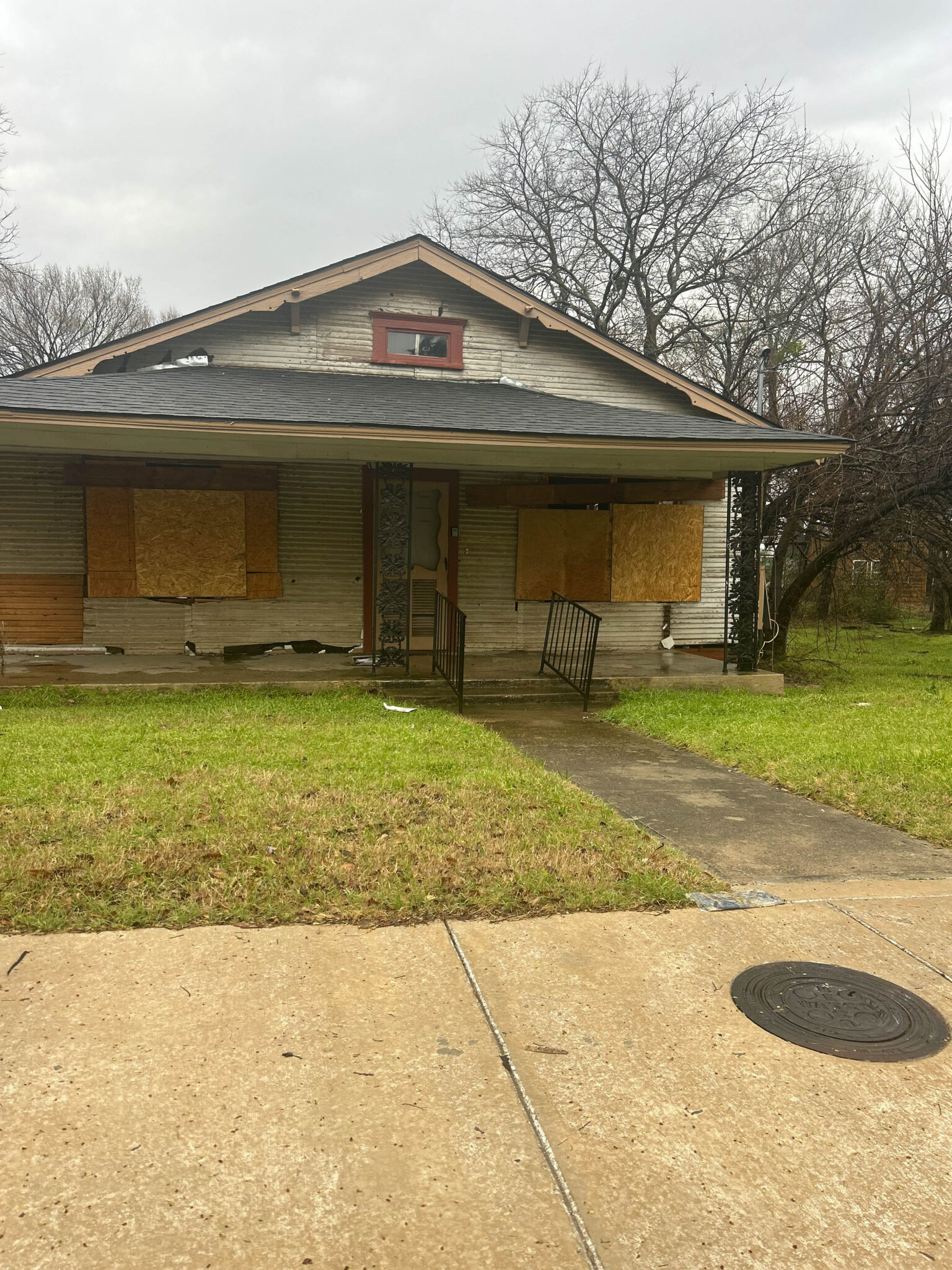
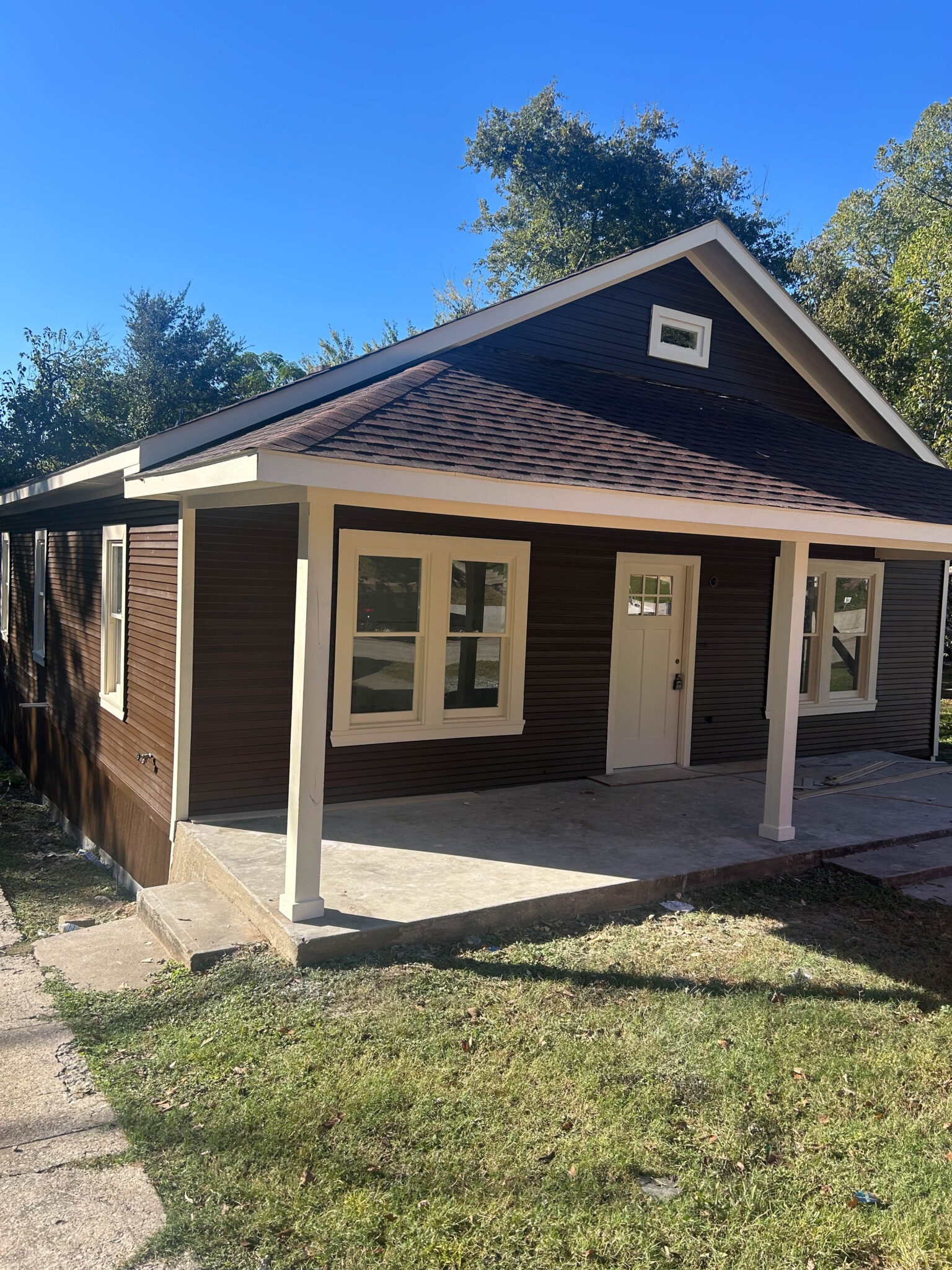
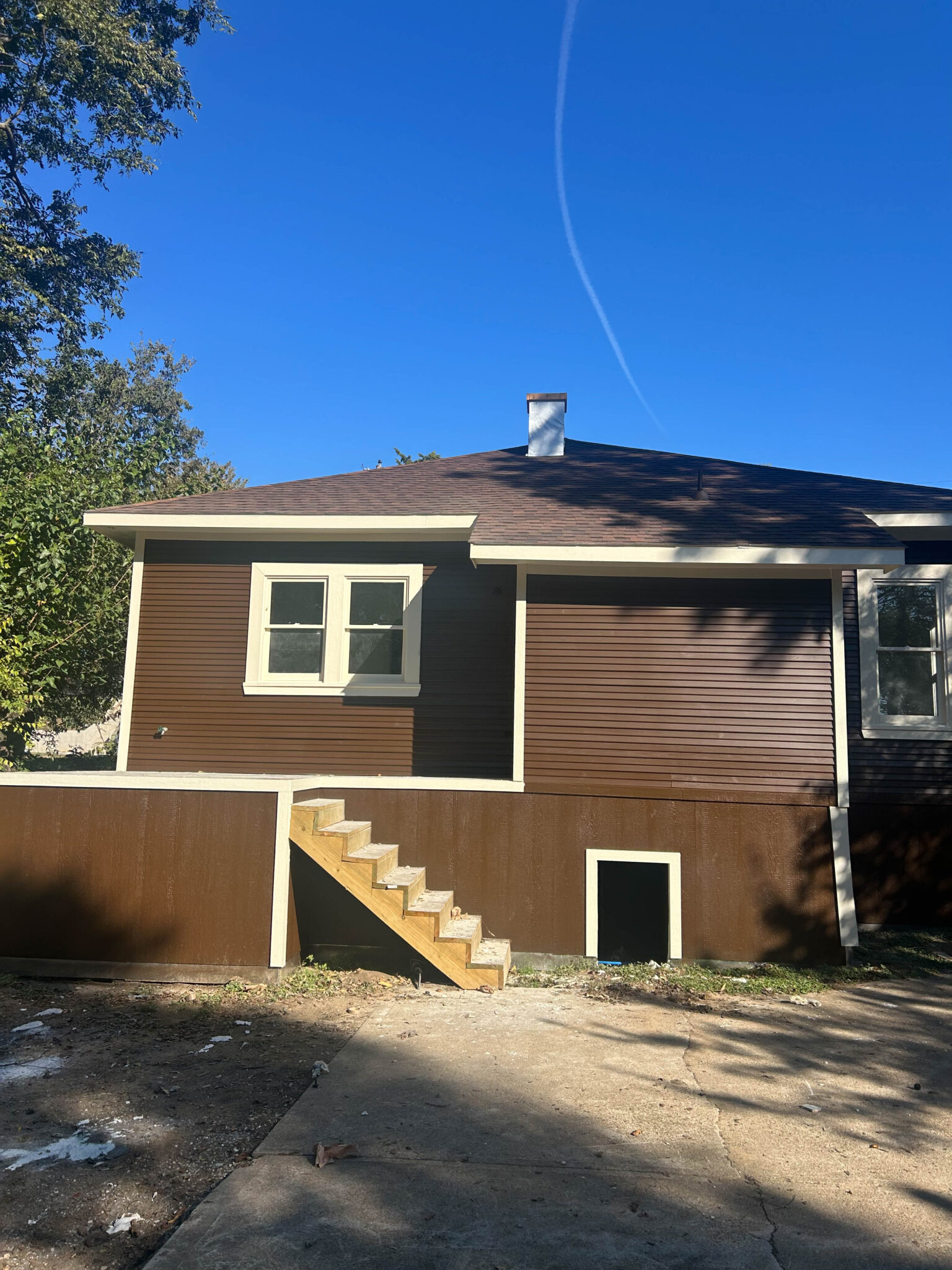
Currently, two properties are under rehab. For completed properties, 1102 Church St. is currently on the market, and 1023 Church St. is complete as well, just needing a fence built and is currently under contract. But these homes weren’t your typical fixer-upper flips. With historical registrations for both Dallas and national registries, certain materials and processes are required.
Rather than a quick trip to Home Depot for a window, you need to make specific wood windows. For a roof, you have to find a color that was originally there and then get approval for the paint colors.
One property had a chimney in historical photos, but when McGee bought the property, there was no chimney. Thus, a fake chimney was installed to meet the exterior requirements.
“Another thing, we have two big windows in the bathroom right by the toilet, so stuff like that,” he says. “It’s hard to get around in construction because of the windows on the outside have to remain in their current position. … That’s just the nature of doing a historic house. Everything isn’t laid out planned because we actually change the entire configuration within the house. That’s for the layout, and the overall is you coordinate between historic preservation and what they want and the City of Dallas permitting and so forth, what they want.”
Since the new year, the only commercial building of the district, located at 102 N. Cliff St., has received a permit to begin construction but is waiting on the application for the State and Federal Historic Tax Credits to be completed. As of mid-March, the project is about 45 days away from receiving that approval. The building will keep a trio of two-bedroom apartments up top, with three small commercial rentals below.
“I get people (who) stop by all the time when I’m out there. A lot of people went to it as the grocery store and then there’s things where they kind of remember going there as a child,” he says. “They just tell me various stories about each thing that was there and how they went there. Sometimes it was a gambling place, at one point in time the grocer; it’s actually been an upholstery store, so it’s been various things.”
The two small houses beside 102 N. Cliff St., located at the 108 N. Cliff Lot 3 and 4, are expected to be completed within the year. For 112 N. Cliff St., the property is currently going through the Landmark Approval process with goals to schedule future meetings with the city to help make new projects possible.
Another project Southern Dallas Progress is looking to be involved with is a proposed trail from Tenth Street to Betterton Circle, including a street that’s been unpaved by the city for a century. The project was pitched by bcWORKSHOP but has been at a slowdown.
“I think internally, they haven’t had this sort of request before because it’s an unpaved street,” he says. “Nobody ever knew it was there, per se, because you drive just thinking it’s another vacant lot.”
The trail proposal is waiting on the city to research the internal process and conduct a legal review, since it would need to transfer from the Department of Transportation and Public Works to Parks and Recreation.
“Overall it’s just a lot of vacant parts, a lot of vacant houses. How do we come together and do more,” he says, “and then welcome people in that want to do more as far as the right thing (for the historic district).”
