
Last year, Dallas City Council approved the creation of the Far East Dallas Public Improvement District (FED PID).
And who better to lead it than a Dallas native who has lived in the neighborhood for almost three decades?
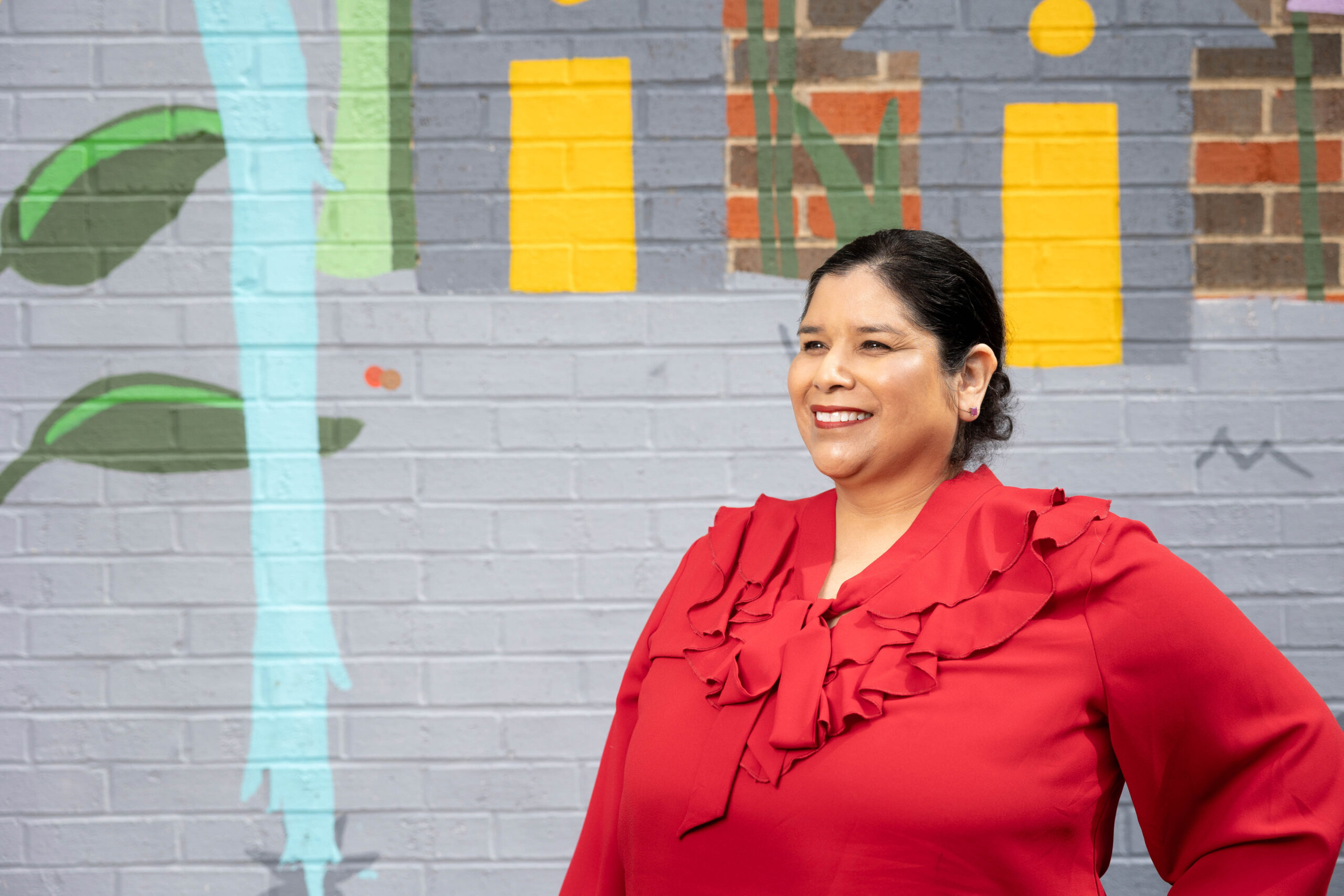
Photography by Gabriel Cano
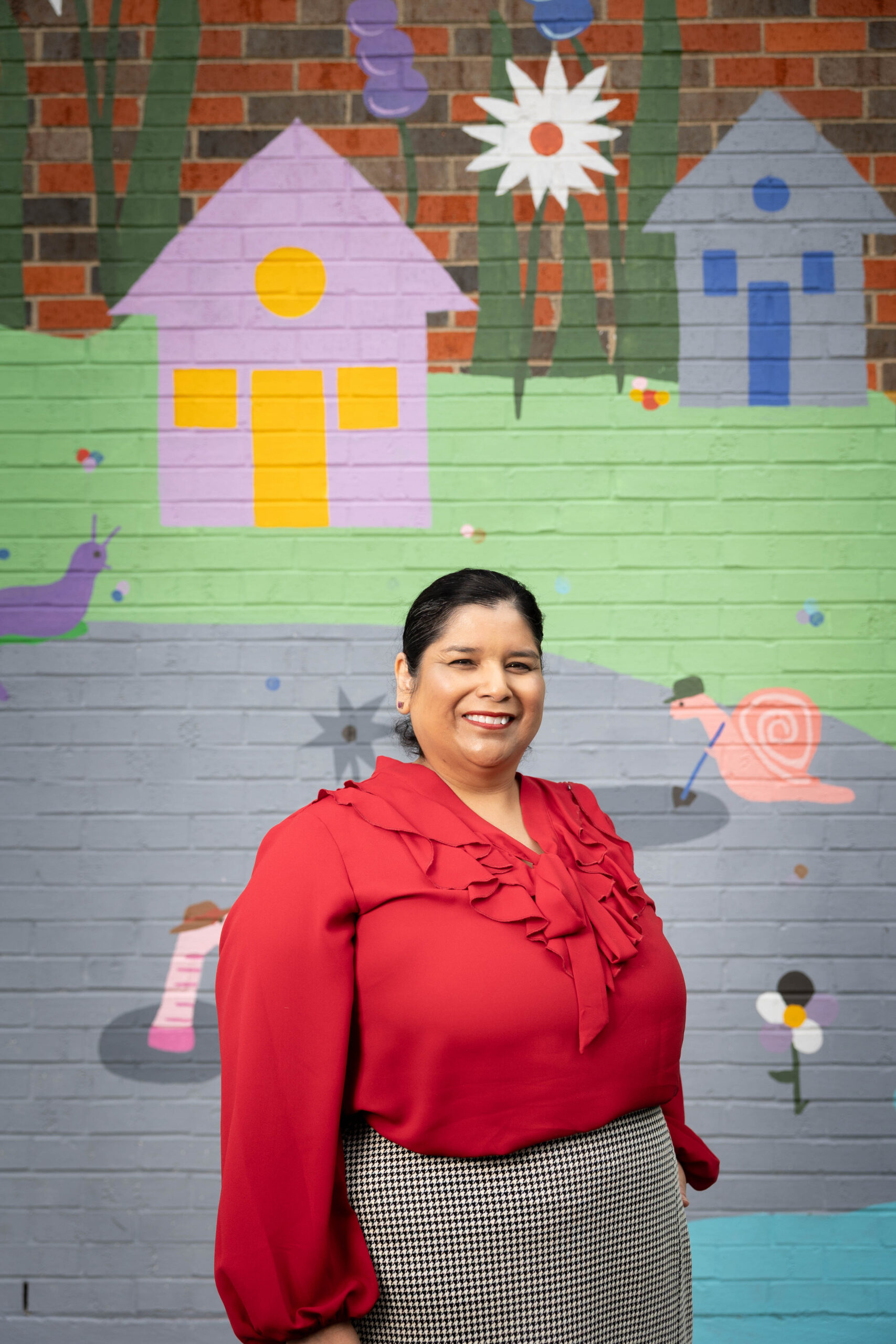
Dolores Sosa Green, who grew up in the Knox-Henderson area, became the Far East Dallas Public Improvement District manager in March. She has spent over 30 years working with community-based organizations, particularly ones to help women and children in need. This includes Big Brothers Big Sisters and Trinity River Mission in West Dallas.
Green has a psychology degree from Texas A&M University and a counseling degree from the University of North Texas, the latter of which she earned while working at Big Brothers Big Sisters.
You’ve lived in Far East Dallas for 28 years. How did you get here?
When my husband and I got married and we had a baby, we decided that we needed to move out of our apartment, and then we moved in with my in-laws and started saving for a house and searching for a house, and we had a realtor who said, “You need to come check out the houses over here off of Ferguson Road. At some point, it’ll become a really good neighborhood.” And so, we found a house, loved it, loved it because it had wood floors. It was affordable. And then we had our second child, and we raised two daughters in that home, and we’ve been there ever since. So we probably will die in that house, too.
How did you come across your current role, and why did you want it?
I was just kind of taking a break, and then when I decided to look for jobs, I saw the PID manager role, and I was like, “Oh, gosh, that’s working with Ferguson Road Initiative (FRI) Executive Director Vikki Martin.” I’m reading it, I’m like, “Oh, I would love to do that because it would be in my community.” And Vikki and I have known each other for a long time. I used to be a board member on the FRI board, and she’s always wanted me to come work with her. I’ve just never been able to because I had other jobs, or there’s family health issues. I decided to volunteer at one of the town hall meetings, and then I was hoping that Vikki would bring it up to me at that point, but since she didn’t, I figured she had the role filled. And then she sends me a text, “Hey, the person backed out, would you take this job?” I’m like, “Absolutely, I would do the job.” And she goes, “You’re not just going to tell me and then leave two weeks later?” I said, “No, I am certain I want this job.”
Tell us about the experience of earning your master’s degree.
My boss kept pushing me. “Dolores, you really need to go get your master’s. I think you’d be great.” And plus, Big Brothers Big Sisters also had money set aside for employees who wanted to pursue their degrees, so I took advantage of that. They paid for my master’s degree. So I went ahead and did it. I didn’t want to go back to school because I didn’t know if I could do it. I already had a young child, but after a lot of nudging from my boss, and then another boss. I applied and got my degree and went to school. That’s before online anything. I was driving to Denton at least two or three times a week to class and was there for three-hour classes and would get home by 11 o’clock. And then by the time I walked the stage to get my master’s, I was expecting my second child.
That must have been hard having to make that commute to Denton from Dallas.
It wasn’t too bad. It actually made my husband learn how to cook a little bit, even though he almost burned the house one time, according to my 3-year-old daughter at the time. He was trying to fry some chicken tenders and maybe some green beans, the saltiest green beans I’ve ever had, the hardest burnt up chicken tenders. I ate it, and I was so grateful.
How has your experience informed your job now?
Anytime you’re working in a nonprofit and working with communities or constituents, relationship building is very key. So as the FED PID manager, I’m going to have to really build the trust and the relationship with the property owners that are within the PID in order for it to work and really try to meet their needs. Because when their needs are met (within our control because there are a lot of things that are out of our control), they will thrive in their businesses.
What does your role within the PID look like?
The top priority is public safety, so I am looking to hire an extended neighborhood patrol coordinator who will schedule patrolling within the PID because, as we all know, police presence helps to bring down crime. But also making sure that police officers and the property owners get to know one another, work together. That’s really the ultimate goal I have for the PID, so that’s in the future, getting those patrols scheduled, having them work after hours and really hitting the high-activity areas, like Buckner Boulevard-Peavy Road, John West Road. And then down the road, really working on some capital improvements, beautification efforts, bringing in art. I talked to a gentleman recently. He goes, “I would love to be able to help with that, bring some artists who can do murals on certain property buildings if they’re allowed.” I would love to see something very creative, something beautiful to look at as you come through the neighborhood.
What can people who live in Far East Dallas expect from this PID in the future?
A lot of people are going to want to move here. That’s what I hope for, although there’s pros and cons to that. I do worry about gentrification quite a bit, but that’s my personal fear only because I’ve already been through that with my childhood home. I want people who have been living here to continue to live here and not be forced out. That’s part of my big picture. I don’t know if that’s possible because anytime you bring up an area, you want to attract greatness, but sometimes, it comes at a cost to the people who have lived here for a long time, and I’m not sure how to balance that out.
This interview has been edited for clarity and brevity.
