

On Juneteenth 2024, the backyard of what is affectionately known as the Little Blue House filled with chitter-chatter and the swing of a tenor sax. It had been a while since residents from one of the only remaining intact Freedman’s Towns in the nation visited the space, and it was the first time the Tenth Street Neighborhood Resource Center was open to the public.
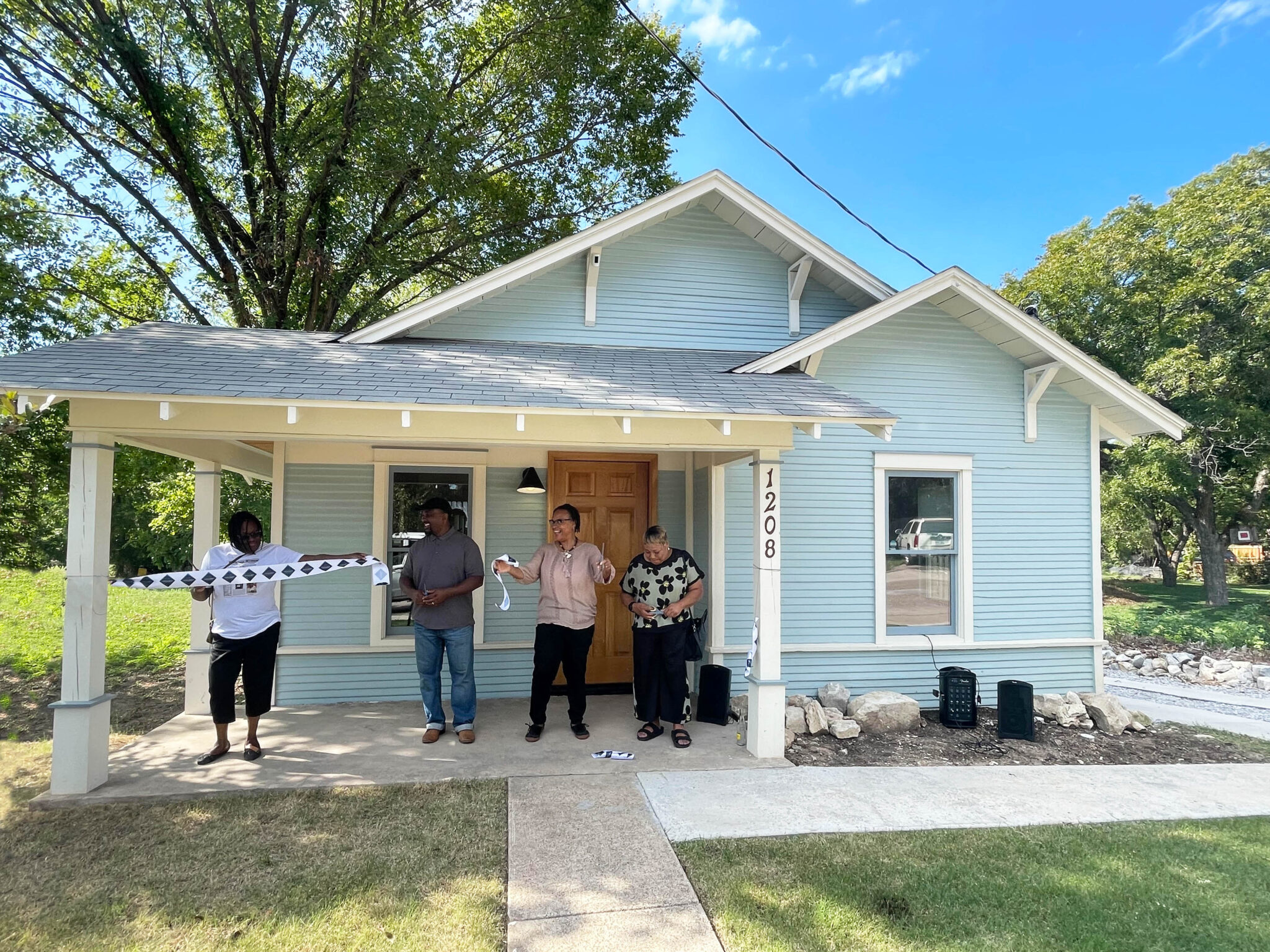
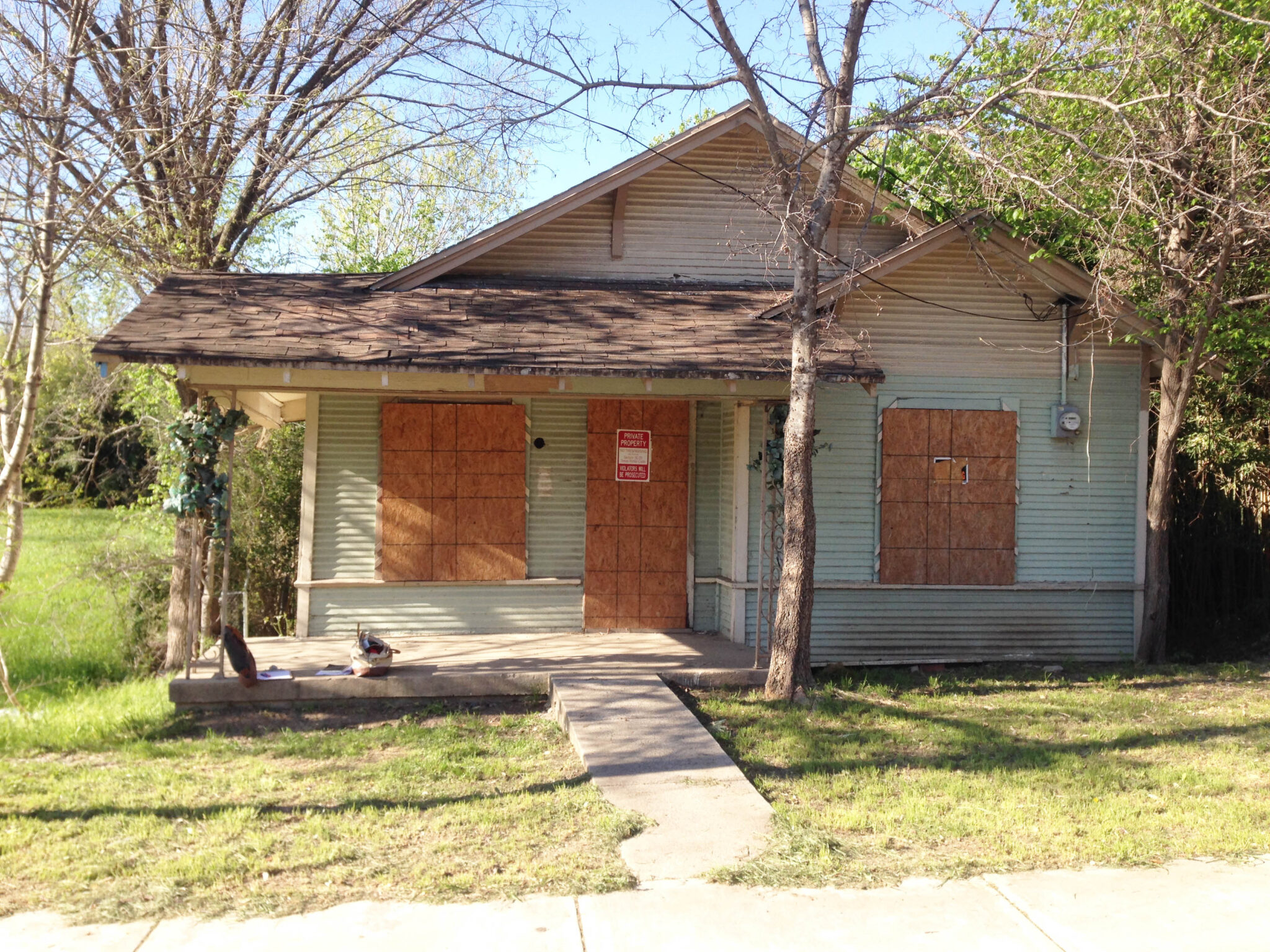
Opening day was remarkable for more than the relatively cool summer temperatures. It’s been nearly a decade since buildingcommunityWORKSHOP purchased the home, saving it from demolition. The Dallas-based nonprofit seeks to improve the accessibility of buildings through design, such as their past projects of restoring the Samano Building in Brownsville and the Congo Street Duplex in South Dallas.
Pei-en Yang, a design manager at bcWORKSHOP, says the organization bought the space with the plan to renovate the interior for neighborhood use and to continue to preserve the historical district.
Founded in the late 19th century, Tenth Street is the largest remaining Freedman’s Town in the United States. The 69 acres was built to be self-sufficient with homes, churches, schools and businesses. The district was placed on the National Register of Historic Places in 1994. In the 25 years following the historic designation, at least 72 homes were demolished.
With each demolition, the district loses a piece of history. It is important to residents and advocates to keep these physical places to truly reflect Tenth Street.
“We’ve just kind of started out, and we’re really trying to kind of keep this space active,” Yang says. “And so we’re looking to continue to find ways to program the space, either from a cultural arts perspective or from a neighborhood advocacy perspective in the sense of workshops for home repair or title clearance or property tax relief.”
Larry Johnson is vice president of Tenth Street Residential Association (TSRA) and has been working with restoration around the neighborhood for about five years. Although he didn’t work on the Little Blue House, he is close to completing the restoration of another house in the district.
Johnson says that he would love to see even more music from different cultural and ethnic backgrounds, along with food because “you cannot have music without food.”
TSRA assistant secretary Rosa Medrano says she would like to see a recreation center of sorts in the space, so that kids of the neighborhood don’t have to go all the way down by the river to access one.
“(The Little Blue House) serves as an example of the type of preservation that we’re wanting in Tenth Street, but also the massing of homes that we want here in Tenth Street to fit the historic fabric of the neighborhood,” Johnson says.
Shaun Montgomery, also with TSRA, says that is the goal of restoration rather than continuing tear downs of historic homes.
“The resemblance of the neighborhood and keeping the culture and history of these properties in the neighborhood,” she says.
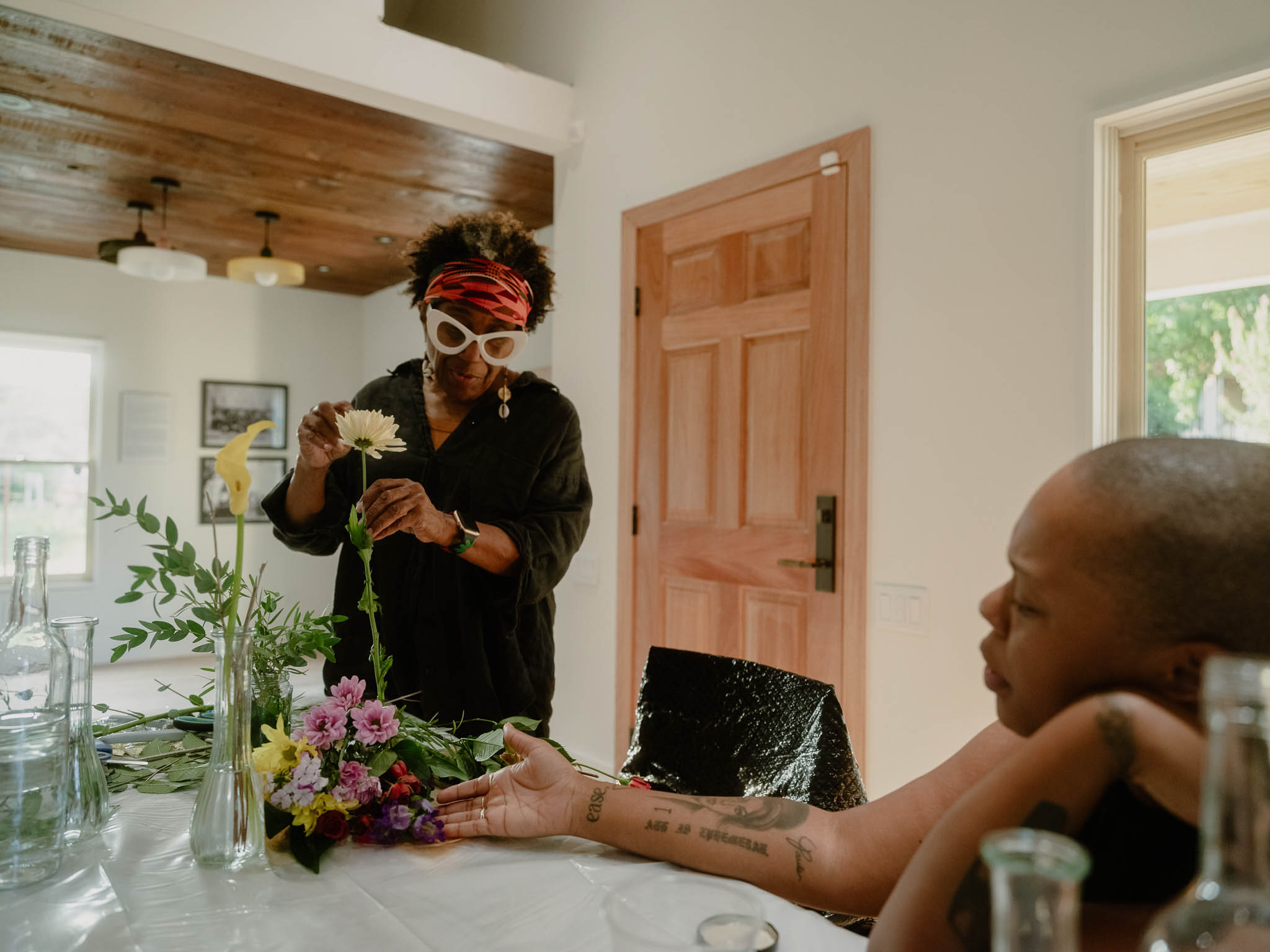
Hakeem Adewumi, a Dallas-born and raised artist, recently completed a residency working as a creative director with the Little Blue House to develop programming this past summer.
“Learning about their work in Tenth Street was something that I think I’ve always been interested in – making sure my work is centered around Black folk and has a very specific vernacular that I really appreciate,” he says.
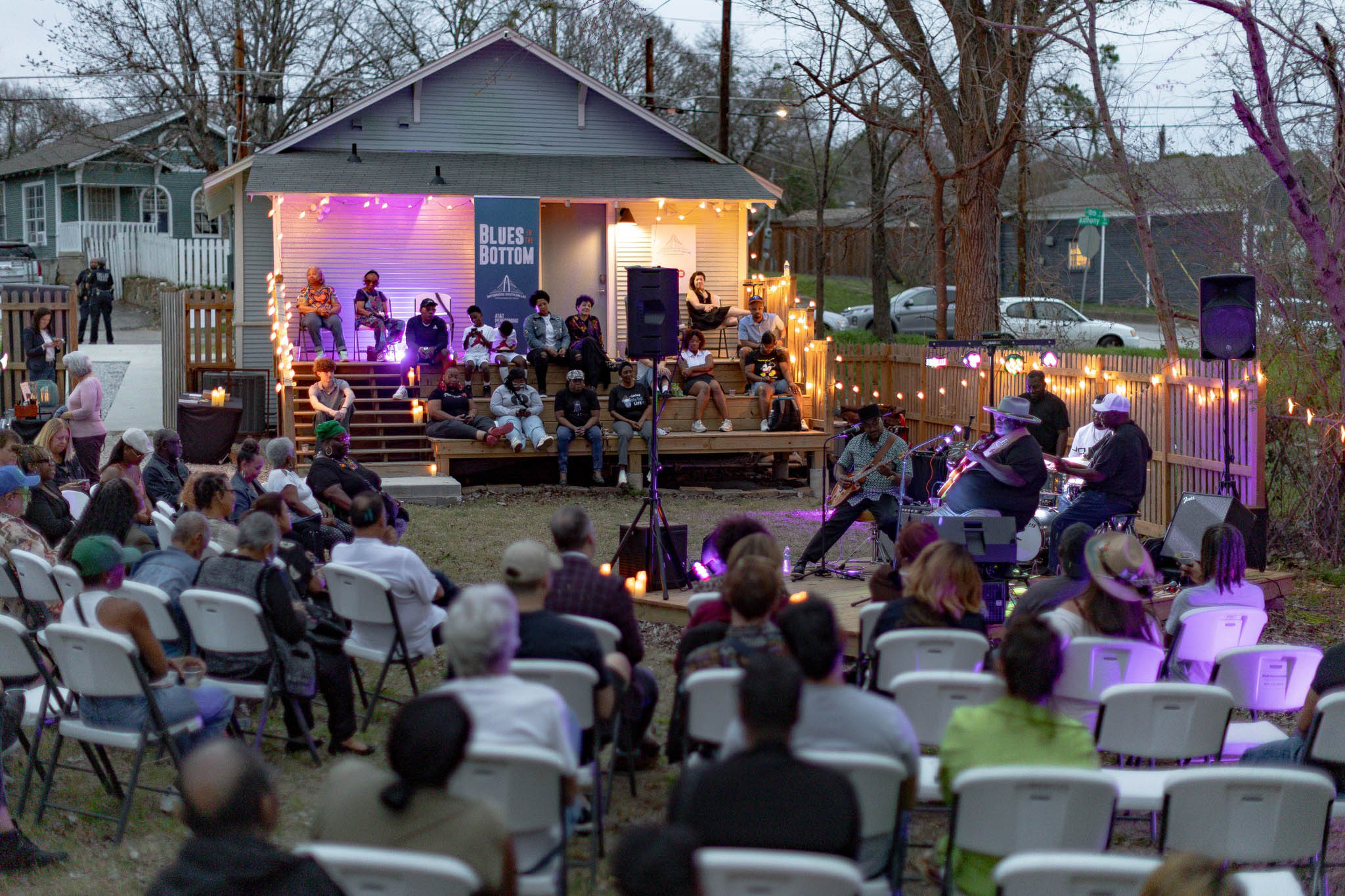
Working with the Little Blue House matched his ambitions. He hosted several performances honoring Black artists, such as a tribute to singer-guitarist T-Bone Walker, and workshops centered around creative arts like cyanotypes or woodworking. He pointed out that poetry night and the opera performance from Dallas Opera singer Johnny Brown were some of the most successful.
“I think artistry and creativity are foundational aspects of Black life,” Adewumi says. “And I think it should be something that is constantly mirrored in the neighborhood despite what we may think and assume about it based on what it looks like.”
The music curations were a big hit with neighbors, something that they would like to see come back.
When the space is dormant from programming, the history takes center stage. Within the walls of the Little Blue House, displays of photos and maps bring to life the buried past. Most recently, they were on full display during the 2025 Heritage Oak Cliff Fall Home Tour. This was the first time any Tenth Street structure was featured at the event.
One such display was created by Texas A&M University’s architecture studio. Students and professors researched what future typologies could look like in the neighborhood, later creating a 3D model and map of the district highlighting homes that were demolished, current homes, and planned homes surrounding the Little Blue House.
Most recently, three additional maps from 1922, 1968 and 2025 were added to show changes over time for the neighborhood.
“It basically shows the impact that the highway has had and also disinvestment in this neighborhood over time,” Yang says.
While the Little Blue House is filled with history, she says that bcWORKSHOP is looking to hear from residents about the future of the space.
“This space is for the neighborhood,” Yang says. “We had two years of programming now, and we want to know how it went and what you guys want to see more of in the future.”
Editor’s note: A previous version of this article was published Nov. 21, 2025. This version of the article is a part of our 25 moments of 2025 for the January 2026 print edition and has been edited to meet the style of our print publication.
