

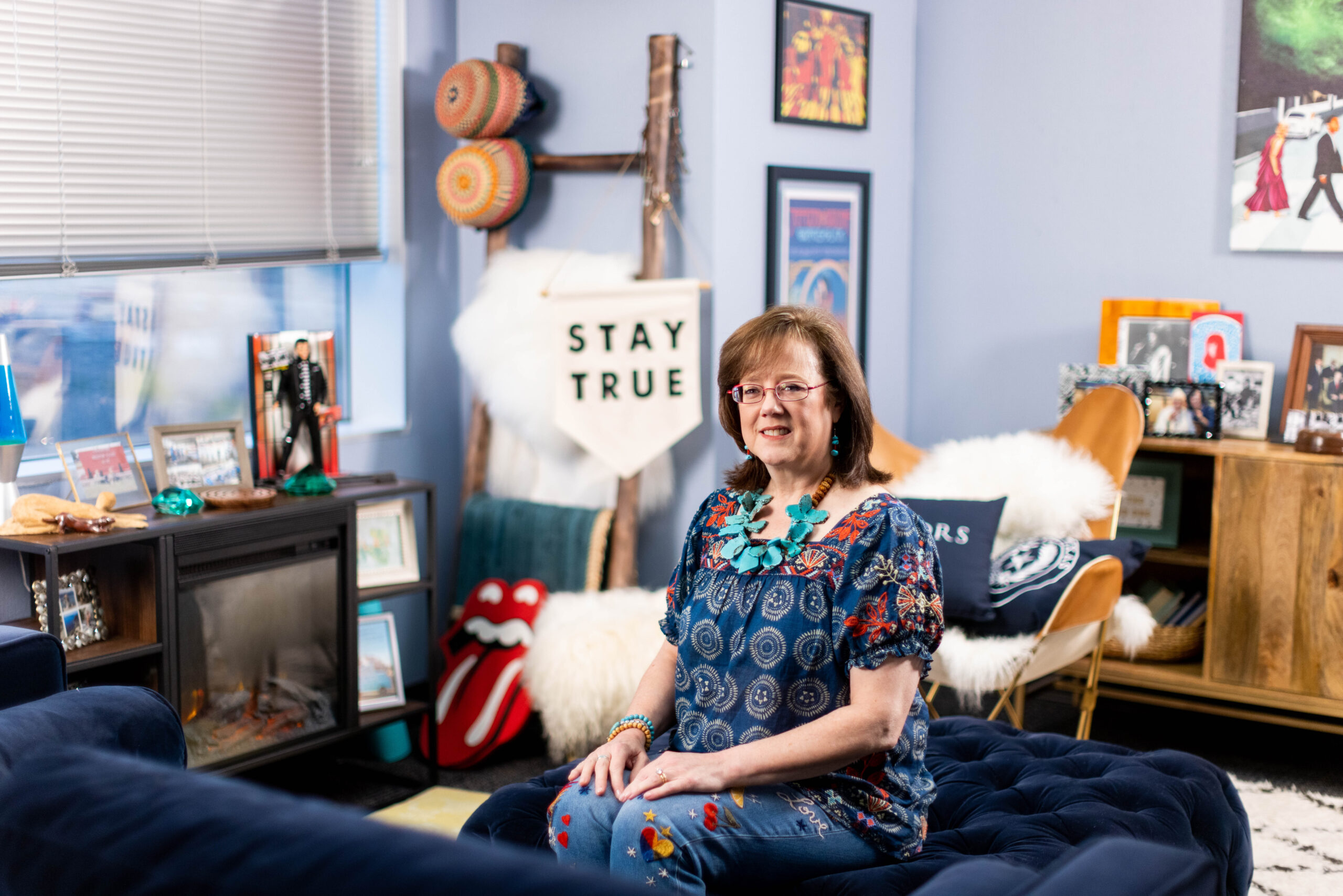
Christina Melton Crain wants felons on the street.
Photography by Kathy Tran
And no, the former Gov. Rick Perry-appointed chair of the Texas State Board of Corrections isn’t advocating for a Gotham-style takeover of society by experienced criminals. Instead, Crain is trying to keep justice-affected individuals, as she calls them, from making the same mistakes that landed them inside in the first place.
A Kimball High School graduate, Crain finished a master’s degree at the University of Texas at Austin before being awarded her juris doctorate from Oklahoma City University in 1991. In her over 40 years practicing law, she’s mainly specialized in juvenile cases and representation.
But, up until 2001, her experience with criminal justice and the corrections system had been limited. That year, Gov. Perry appointed her to the Texas Board of Criminal Justice, an experience which she describes as eye-opening. Crain went on to serve as the first and only chairwoman of the board and is credited with significant reforms during her tenure, including the introduction of a program intended to soften procedural barriers during family visits.
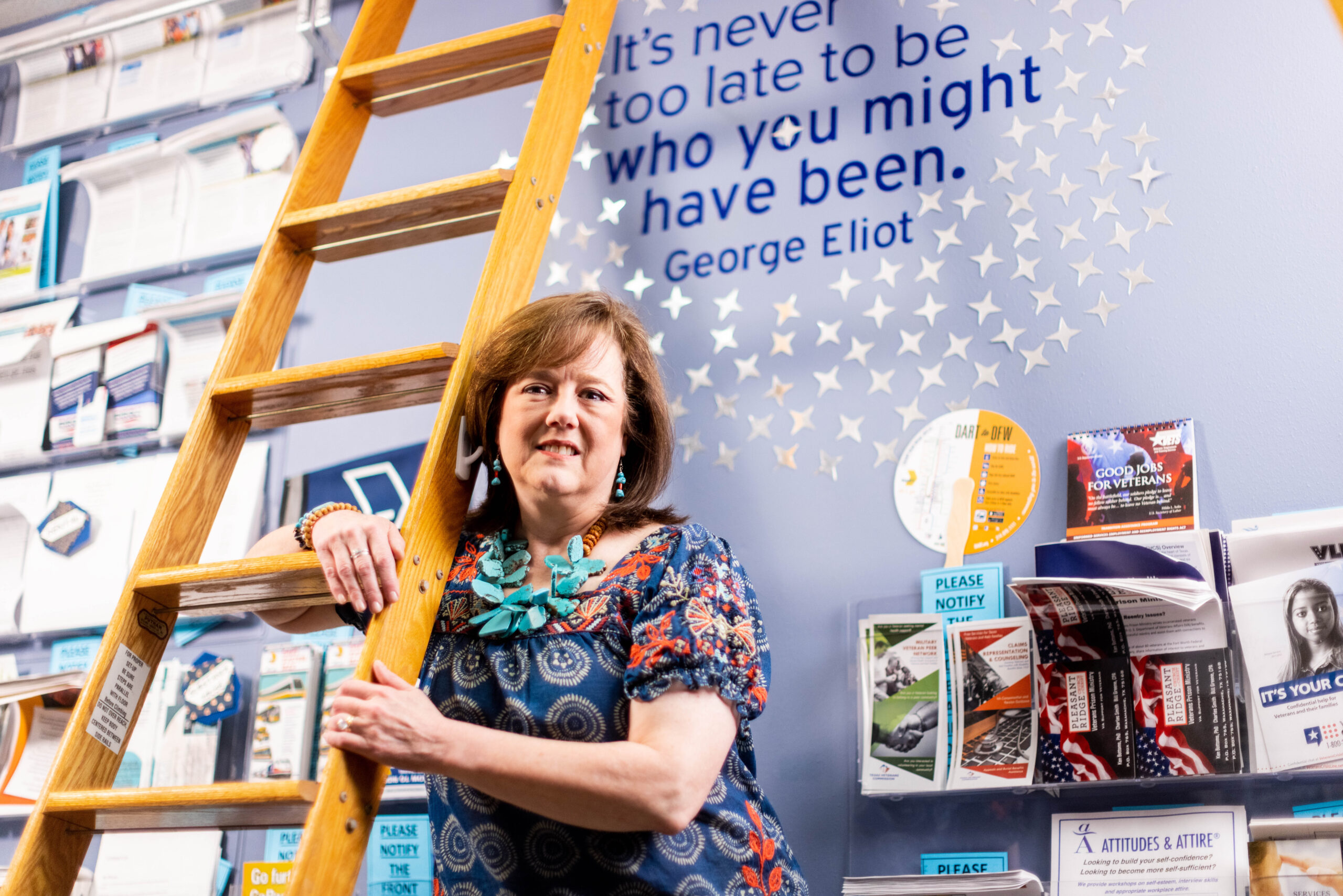
As her term ended in 2008, Crain knew her work in the field wasn’t finished. In 2010, Crain founded Unlocking Doors, a nonprofit organization created to smoothen individuals’ transition into society and prevent recidivism — the economic impact of which its CEO and president stresses when emphasizing the organization’s importance.
Operating out of a north Greenville Avenue office tower, Unlocking Doors serves close to 1,000 clients a year, most of whom are referred to the nonprofit while still incarcerated. Crain’s team finds employment, housing, healthcare and other services for clients with one of the organization’s 300 plus partner organizations. The organization’s model has a 92% success rate, Crain says.
To learn more about how Unlocking Doors achieves that success rate, we sat down with the former President of the Dallas Bar Association and current University of Texas System regent for an interview. Here’s what Crain had to say.
Photography by Kathy Tran
How’d you get into criminal justice?
No one in my family went to prison. I didn’t do criminal law. And then all of a sudden, one day, I get a call from Gov. Perry, and he says, “I want to put you on this Texas Board of Criminal Justice.” I’m like, “What the heck is this?” A couple months into it, I was pretty much wowed by the whole thing. It’s not like a lot of boards and commissions where you just get together to rubber stamp. It is about lives, and it just resonated with me. Plus, in my law practice, I represent children who are abused, neglected and injured, and a lot of their parents have been involved in the criminal justice system.
Photography by Kathy Tran
What are some misconceptions you think people have about restorative justice?
A lot of times when people hear rehabilitation or restorative justice, they’re thinking that we’re just letting the person off. It’s “nobody can be rehabilitated,” and that can’t be further from the truth. Now, are there a lot of people that we will never help? Absolutely, because there are a lot of people that just don’t want to be helped, but it starts with the person. That’s our model here, you can opt into our program. It’s not mandatory. We talked about making it mandatory at one point, going to the state asking public officials to say, “If you’re coming back to Dallas, this ought to be a mandatory program.” We decided long ago that it was never going to work, that it was best to make it an optional program, because then when the person walks through the door, we know at least they are saying up front to us, “I want a fresh start.”
What were the early days like?
Shoestring budget, basically taking a very small concept and forming a board. They were friends. They were people involved in the Texas Department of Criminal Justice, some judges, etc. You would go to every meeting that became available just to get the word out that we are here. And by the way, we’re here to work with everybody. So it was making sure people understood why we were different and why we were relevant in the space. I think that was super important to understand that we’re just not another reentry organization. It took five, six years to kind of really start resonating with everybody, and then we moved to this space and built this out, and all of a sudden we started getting noticed.
What does the process look like?
You fill out several assessments on your own. We have a career key that you fill out. We have a benefits calculator you fill out. And then there’s what’s called BEI, it’s a behaviors and experiences inventory that you fill out. And then we have a psych form that you fill out, that we just added this year, and then you get placed with a broker. Our reentry brokers are our case managers, because they’re really brokering the relationships. We don’t provide the service, that’s how we’re unique. Tier one brokers are going to take you and they’re going to do the full-on evidence based assessment. It’s the one that TDCJ uses. So our folks have to be trained in it. It’s going to tell us everything, from number of incarcerations, education history, children, health care. Everything. So that broker is going to take all these assessments and is going to work up a plan for you. The tier two broker is going to take that plan and is going to start making referrals for you, based on the needs that are in that plan, to one of our 300 partner organizations. Then we can add that person in or that group in as a partner, but once all those referrals are made, we’re going to keep track of you as you’re working that plan.
Why is this so important to the general public?
I’ve got to look at the return on interest is, and I’m in the people business, but yet, how does this fiscally affect the community? And so I think, roughly, it’s about $80 a day for the general population offender at TDCJ. So if you take that and you amortize that over somebody being incarcerated, let’s say they get out and then they come back, and then they get out and they come back. Think about that. I mean, it’s crazy, whereas, on average, for the general guy that walks through our doors, it costs me maybe a buck a day.
This interview has been edited for clarity and brevity.
