
Photo by Victoria Hernandez.
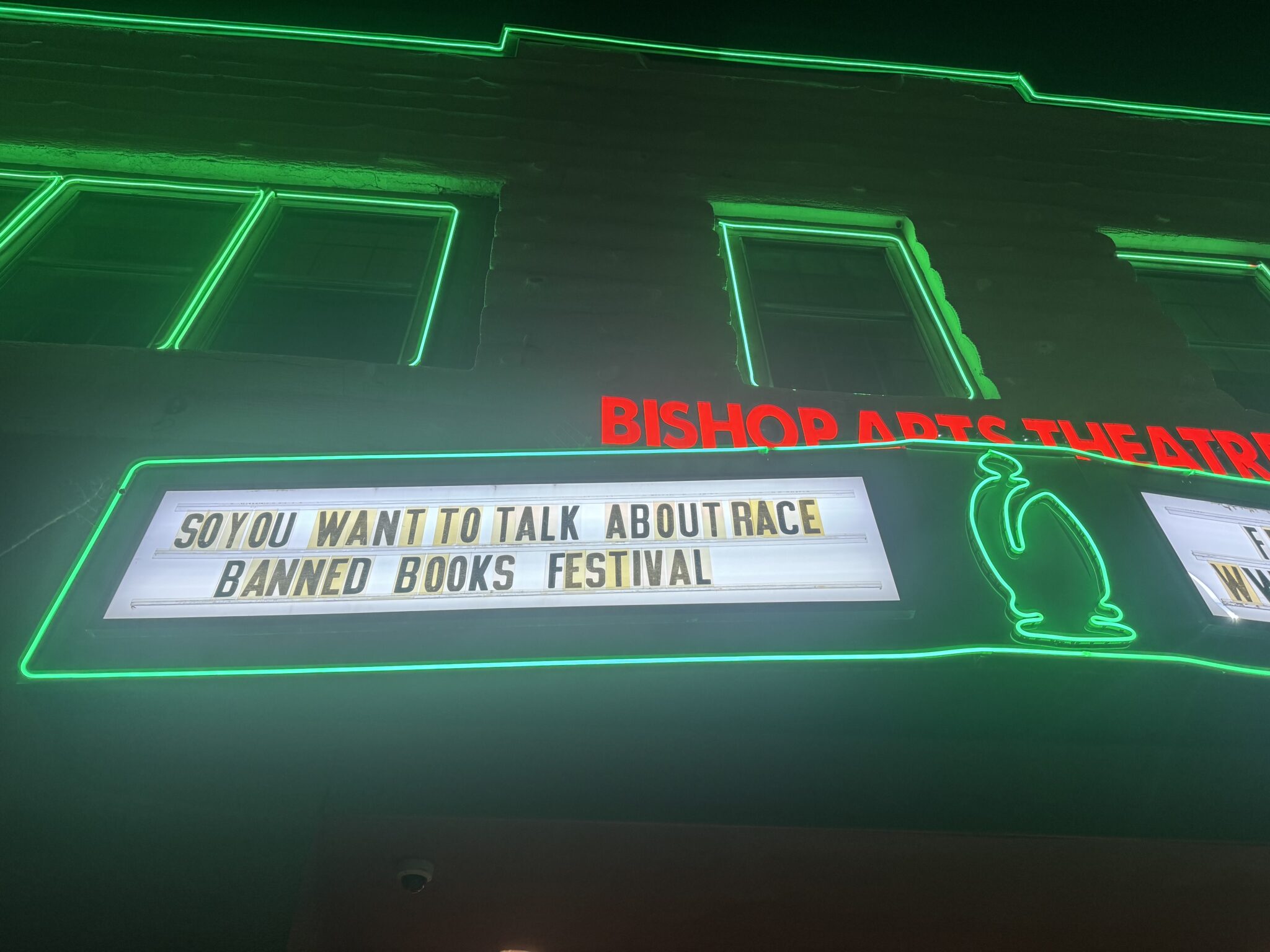
The annual Banned Books Festival has returned to the Bishop Arts Theatre Center with this year’s participating local playwrights building their stories around Ijeoma Oluo’s So You Want to Talk About Race.
Directed by Charles Jackson Jr., each play focuses on a chapter from Oluo’s book. These stories involve hard conversations that go beyond just explaining race, but invite the audience to grapple with it in a deeper way.
Claire Fountain first participated in Bishop Arts Theatre Center as an actor in 2024’s production of Jet Fuel. Considering the center to be like her theater home, she wanted to be involved in whatever they’re doing and decided this year she would write a play once learning about the Banned Books Festival opportunity.
She wrote Open Call to center on what she thinks may be happening behind the scenes in the theater world.
“I think that there’s a lot of racism and DFW theater, and a lot of stuff that I think everyone kind of whispers about, but nobody really says, ‘Hey, isn’t it crazy that the playwright of this play said this needs to be a diverse cast, and you cast a single black person in the smallest role,’” Fountain said. “I think that it’s being whispered about, but nobody’s just kind of saying it. And I felt like this was my opportunity to kind of say it on stage in the way that it’s going to make sense to these people who participated in theater.”
In So You Want to Talk About Race, the very first sentence of the introduction stuck with Fountain. “As a Black woman, race has always been a prominent part of my life,” Oluo wrote.
The quote reminded her of a conversation with a local director she had while working at a coffee shop. He brought up a racist trope that Fountain said she would never repeat.
“It just struck me that, ‘Wow, like, this is a conversation where I’m feeling very white.’ This white man would not feel comfortable saying this to me if I were a person of color. He would never just throw racist tropes out. And then I kind of sat with that, and then … I haven’t made it up to being a director and being in the rooms where these discussions around casting are happening, but I kind of imagined how it would go if I was there,” she said.
While Fountain’s play is about what she thinks these conversations are like, De’Aveyon Murphy’s play One Last Night takes direct inspiration from the conversations he’s had.
He started writing heavily in college while earning his degree in acting. After graduating from the University of Texas at Arlington, Murphy’s work was shown at the Boston Center for the Arts’ 2024 Queer Voices Festival. One Last Night is his second show to have gone up professionally.
Originally stemming from a work about Beyoncé’s activism in the community and later as a piece about Blackness following the death of George Floyd, the play morphed over five to six years into what is shown at this year’s Banned Books Festival.
“It’s about these friends that get together one night. They’re celebrating someone leaving and moving on to bigger, better things,” he said. “Getting, as I say in the show, their ‘big boy job,’ and something happens to one of those friends, and they have to have this tough conversation about where they all stand, and what’s happening in the world now.”
His play focuses on a section of Oluo’s book that talks about lived experiences when it comes to race. Murphy said that his lived experience of conversations with family and friends influenced the play in the different ways the people in his life look at politics and how that affects us.
“I have some cousins that are kind of more conservative. I have some cousins that are more progressive liberal. They’re all over the spectrum,” he said. “So when we come together, and we talk to each other, this show kind of stems from that. Us talking to each other — us might not agree with each other fully, but like us calling each other out and holding each other accountable for things.”
Linda Boroughs’ play One Person Can Make a Difference is also from lived experience, but not her own. She was inspired to tell the story of wrongful arrest and took that chapter on police brutality from Oluo’s book as a guide to give that story a bigger audience.
“I was called for jury duty, and I wasn’t selected, but during jury selection, the defense lawyer was giving a speech, and he talked about his own experience. How he had been arrested, even though he wasn’t guilty, and how that arrest had affected him throughout his life, and that his story was in my head,” she said. “I mean, I had heard other things like this, but he was a really good speaker, and his story was in my head when I saw the email asking for submissions, and I thought, ‘OK, that would make a good story.’”
As an avid theater goer, having seen previous iterations of the Banned Books Festival, she saw writing the story as a play for this year’s festival as that opportunity.
“I’m white, but I’m not blind. I can see how Black people are mistreated and how other people of color are mistreated, especially when you look back at the history of our nation, and you don’t even have to go back to slavery to see how poorly people of color have been treated,” Boroughs said. “So I would say, I have a passion of seeing people treated fairly, no matter what color they are. And right now, it seems like the people of color are where we need to focus our attention if we want to, if we want to see social justice, and we want to see people treated fairly.”
This year’s festival includes three additional playwrights to the ones above: Brandon Jackson, Erin Malone Turner and Tayla Underwood. To learn more about their work and for tickets to the remaining shows, visit https://bishopartstheatre.org/.
