

This story has been updated from our June print issue, which was printed May 22, 2026. As of Tuesday, May 26, Tony Moore has transitioned his role of president and CEO to current Chief Operating Officer Brian Kilpatrick.
It was the best of times, it was the worst of times, it was the age of highways, it was the age of division, it was the separation of neighborhoods — in short, the period is much like the present, that vehicles continue to dominate our city. But now we’re in a time where we hope new green spaces will reconnect us.
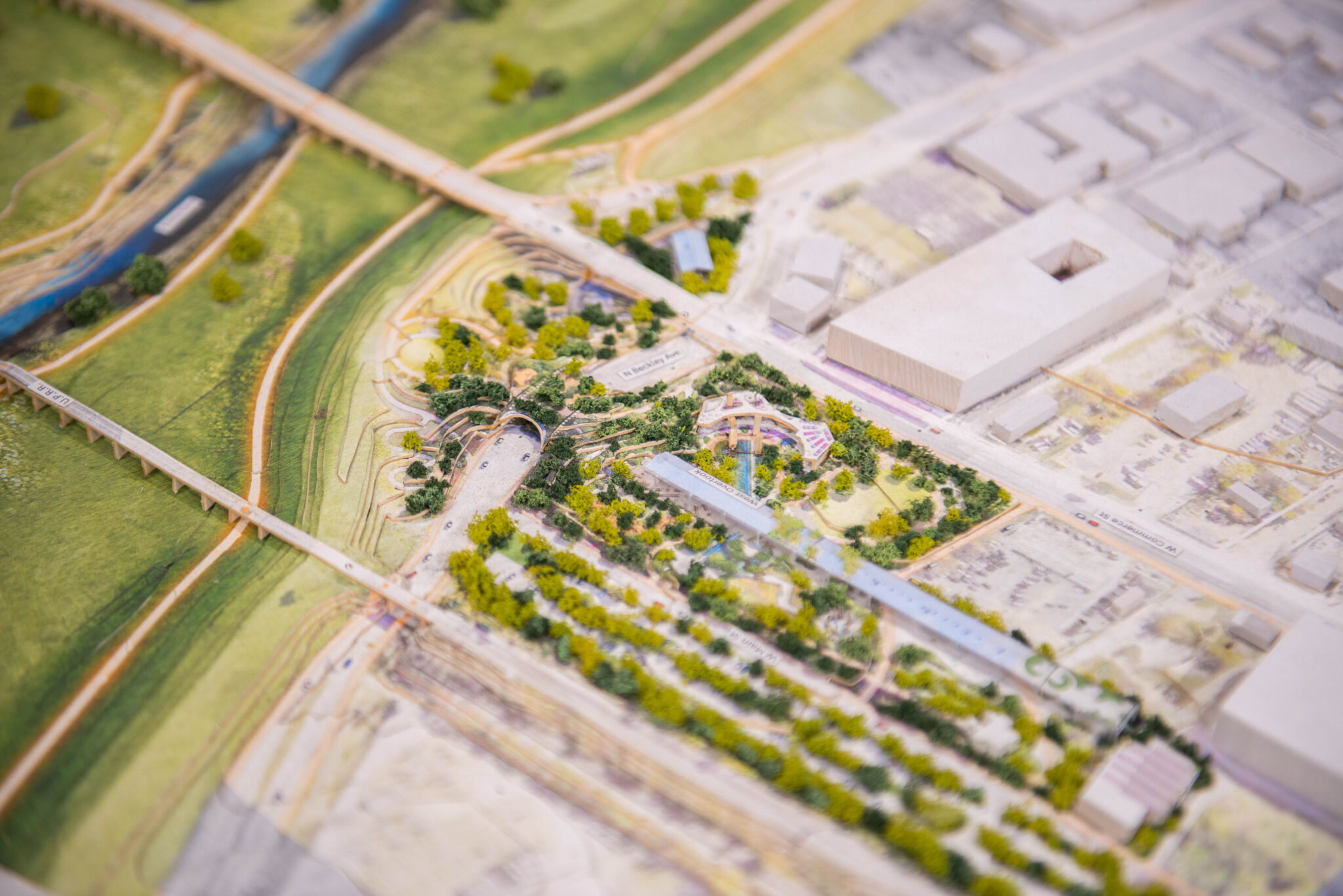
The concentration of trees is where the West Overlook portion of Harold
Simmons Park is located between West Commerce and West Main Streets. Photography by Lauren Allen
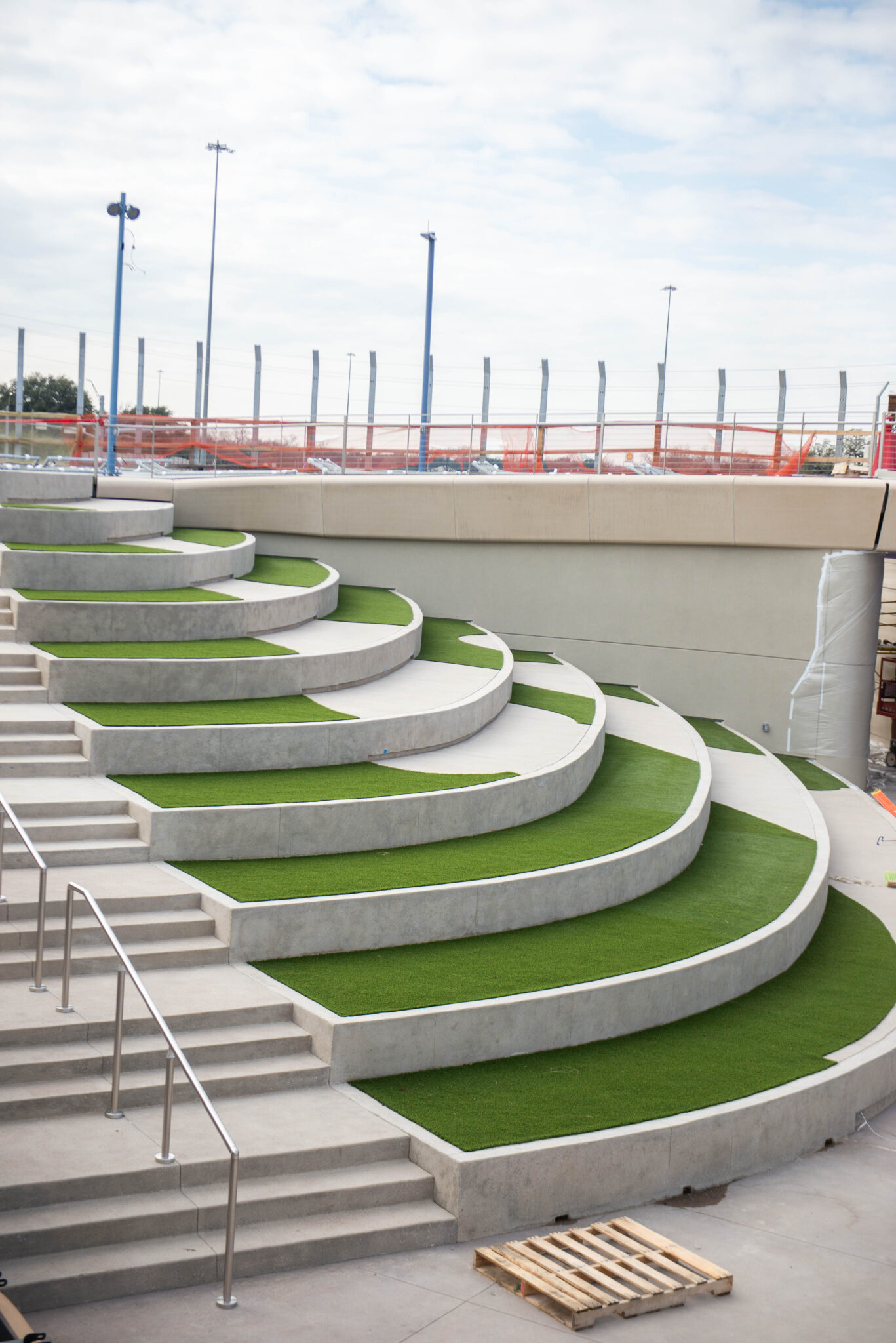
When Klyde Warren opened in 2012, Dallas entered the age of the deck park. Now, the southern sector is getting its very own with Halperin Park. The 5.3 acres will cover the flying cars of Interstate 35E below, with 2.8 acres of Halperin Park already open.
The origins of Halperin Park came about a decade ago. Neighbors discussed the possibility of park development aligning with a planned reconstruction of the highway from the Texas Department of Transportation that could double as an opportunity to reconnect west and east Oak Cliff.
Around that same time, Annette Simmons made a $50 million donation for the construction of a new Trinity River park in honor of her late husband. The Trinity River Corridor Project didn’t start in 2016, having been awarded a $246 million bond program in 1998 by voters. The work of the U.S. Army Corps of Engineers continued on in between the levees and still does to this day, but now the project includes Harold Simmons Park.
So here we have two parks. Both years in the making, many changes to each and both theoretically investing in underserved communities of Dallas.
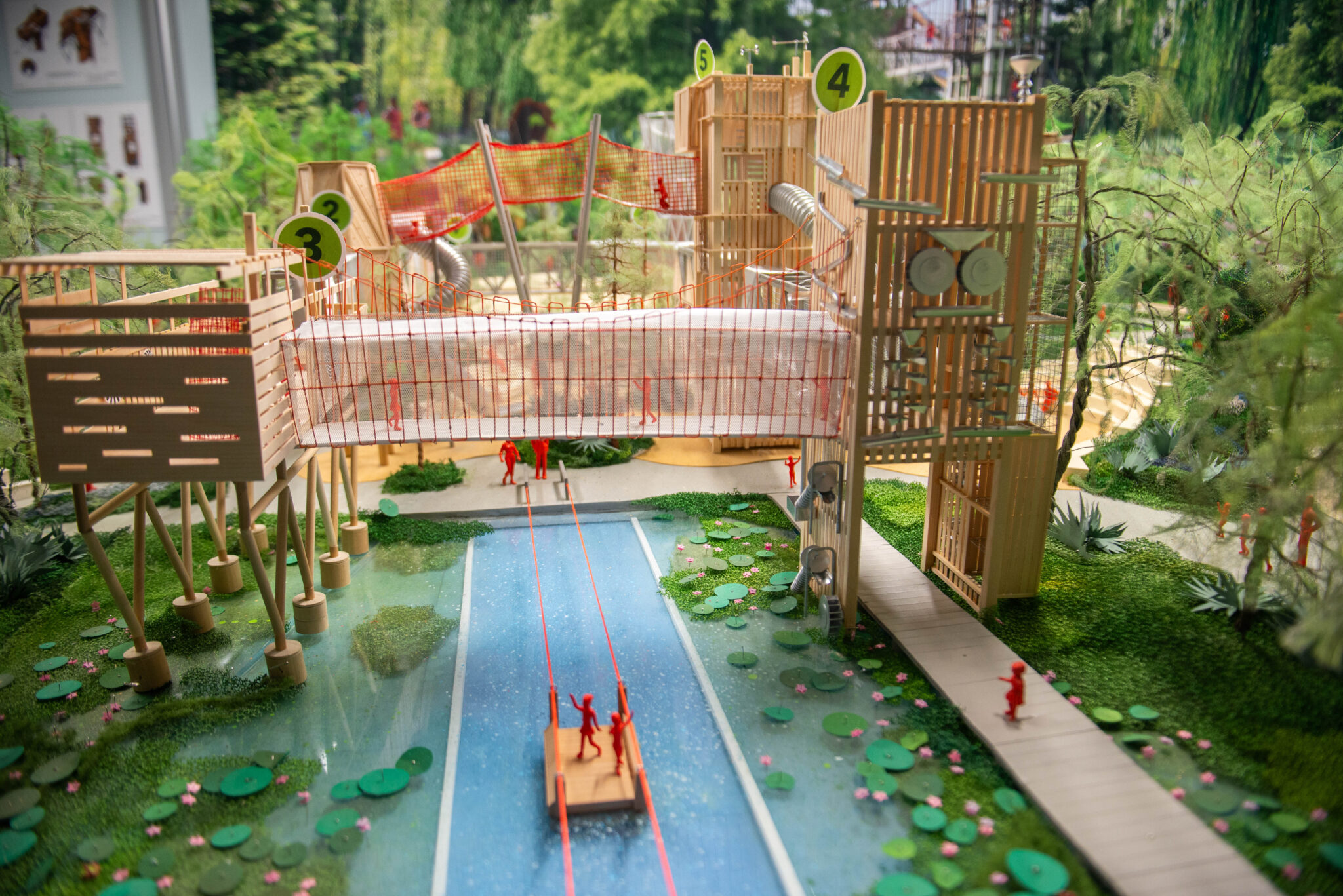
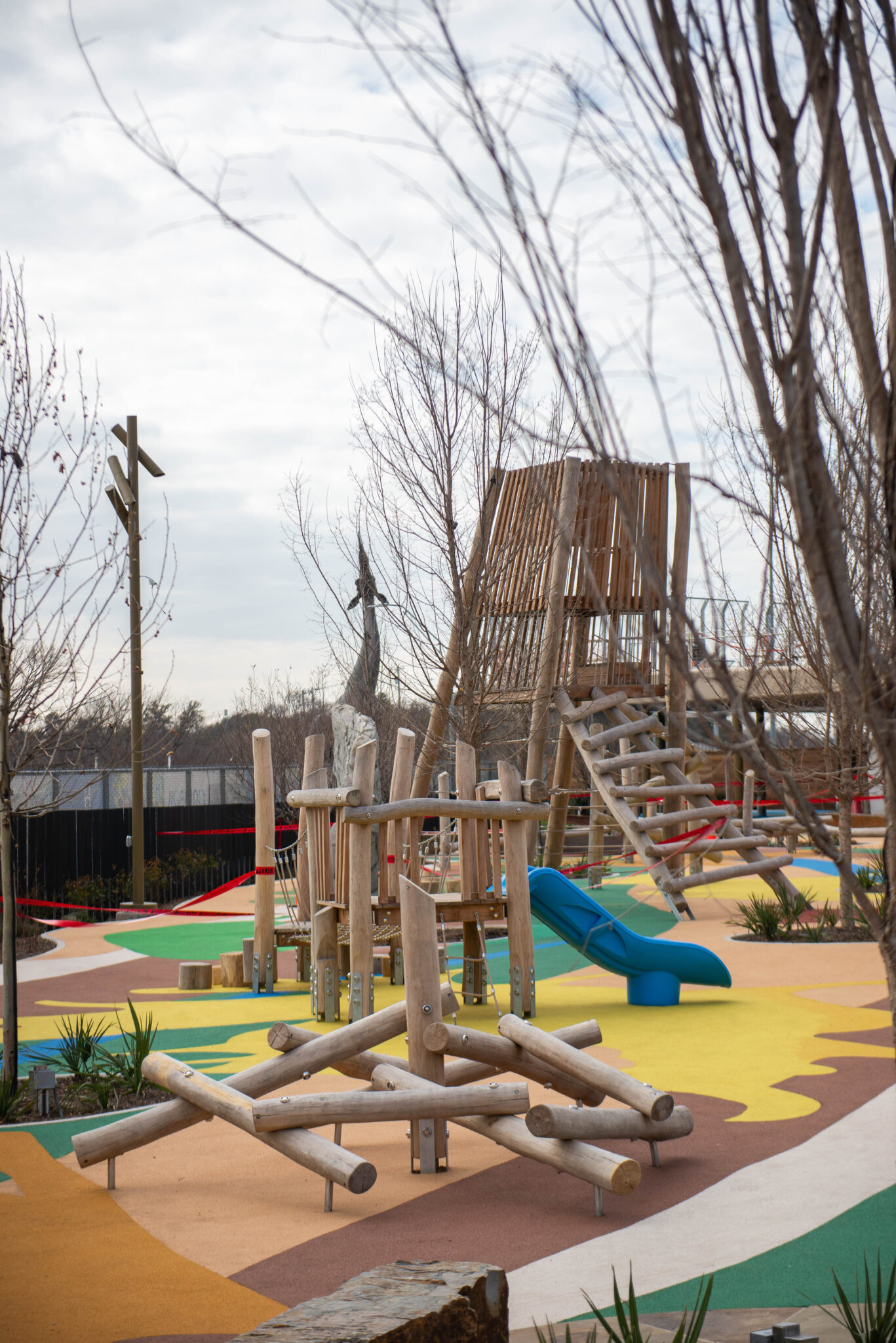
A model of the “play cove” at Harold Simmons Park that will include six towers. Photography by Lauren Allen
“It really seems as though parks have been the sort of natural way to undo all of this (dividing of neighborhoods), not only damage, harm, blight that got created from the past,” East Kessler neighbor Katherine Homan says, “and this is just the biggest blessing and the biggest solution to the past that we are just so fortunate now to be able to say, ‘It’s coming in West Dallas, in Oak Cliff,’ which was so devastated by the past.”
Homan and Paul Carden are the pair that started it all for Halperin Park in 2016. They presented the possibility of a deck park to neighbors, reaching out to organizations like the Oak Cliff Chamber and Heritage Oak Cliff (then Old Oak Cliff Conservation League) to gain traction, eventually discussing with elected officials and building community interest.
That outreach led to a $300 million deck park. The first phase opened in May and a second phase is on the way.
April Allen, president and CEO of the Southern Gateway Public Green Foundation, was one of those in attendance at the early community meetings when Halperin Park was just a concept.
Her involvement grew to joining the board, later being asked to step into her current role.
Like her own origins with the project, Allen says Halperin Park has been very intentional about including the community both in planning and in the opening weekend of the park, which she described as “an ode to Oak Cliff.”
A key component to that planning is the Community Advisory Council.
“That’s made up of residents from both sides of the freeway,” Allen says, “and so we relied on them for input, for helping to get the word out and for keeping us honest in terms of making sure that the park really is reflective of the wants and needs of our community.”
Eddie Jasso, Community Advisory Council member and Oak Cliff native, joined the council in January and currently lives in Kiestwood.
His family has been super excited for the park and plans to utilize the Dallas Area Rapid Transit (DART) to get there based on what he had heard about parking limitations. He added that with little kids and the way people can focus when getting on the highway, he has safety concerns.
“Obviously, we would love to have parking to where the kid can get off and run to the park without me having to worry about it,” he says. “But, this is a different type of park, different situation, so I understand the constraints there with parking, but you know, we’ll see.”
Daymond Lavine, founder of the Brentwood Trinity Heights Community Action Group, is also involved with the council. After moving to Brentwood in 2022, Lavine established the action group in 2023 as a way for neighbors to rally around certain causes such as blight, code compliance, and development. He began his involvement with Halperin Park about a year and a half ago.
When it comes to Halperin Park, Lavine says there is a disconnect with his neighbors. They also worry about parking and how traffic will actually flow over time surrounding the park.
“I can tell you immediately in my neighborhood, people sort of see the park as, ‘That’s happening over there, but I’m still in my neighborhood,’” he says. “We pretty much have to handle what we’re doing in our neighborhood because we’re not really seeing how the park is going to handle dealing with our issues like vice and things of that nature.”
He says when it comes to crime surrounding the park, Halperin Park staff is not asking about that.
Although Lavine has brought up this concern a couple of times with the council, he has found it easier to focus on the community action group when it comes to addressing those neighborhood issues.
“We don’t have the resources to continually reach out to the park, so we have to continue to do what we need to do,” Lavine says. “We need to maintain our jobs. We need to maintain our homes. We need to maintain our families, and we need to maintain our current livelihood, but I think the onus, when major projects come into an area, the onus is on that project with a multimillion-dollar budget to respond adequately.”
Safety within the park has been a concern across the process when it comes to crime in the area. Jasso says although Oak Cliff has had a bad rap for a long time, it happens everywhere, and he is not concerned about that when it comes to the park.
“I think the more people use it, I think the less crime will be around there,” he says.
Allen says there will be a 24-hour security presence at the park, with future plans to work with the City’s Department of Transportation and Public Works to ensure that there is safe access with crosswalks that are visible.
When Shola Rogers moved into her Elmwood home just eight months ago, she says having Halperin Park so close added to her desire to join the neighborhood.
“I know that (Oak Cliff) already has its culture and its perks that I love, and just that added excitement and added entertainment. I thought was going to be a really good fit,” she says.
Since her move, Rogers says that what she’s gathered from most people is that excitement and the ability to have a new community gathering space free from “price points or exclusivity.”
Halperin Park is meant to be the opposite. It’s a park with a purpose.
“It is going to reconnect parts of Oak Cliff that had been divided by the highway for decades, and stitching that together,” State Rep. Rafael Anchía says. “Everything from Tenth Street Historic District and The Bottom all the way across through the Marsalis Corridor, and ultimately Bishop Arts.”
Anchía worked with State Sen. Royce West and State Sen. Nathan Johnson in 2024 to secure $80 million in federal funds for four Dallas projects, with $25 million pledged to phase two of Halperin Park.
“You’re going to see one big corridor where Oak Cliff families are going to be able to enjoy themselves. Klyde Warren serves as almost a front door for both Uptown and Downtown,” Anchía says. “And it’s a meeting place for people from all over the city, and to have something like that in the southern sector where I live is going to be a really terrific amenity… I think people from all over the city are going to use the park, but the fact that it is anchored in an area that has been, let’s say, under-invested for a long time, is good to see.”
Although Halperin Park is an investment, Lavine says it seems that most of the benefit is for those who are outside the immediate area.
“My hope is that it truly communicates more than just a lip service to what it needs to be in this area. My hope is that it truly begins to emote what it is to be in an area that was once a Freedman’s Town, right?” he says. “I mean that the whole thing about the park is that it’s bridging the gap between the east side and west side of Oak Cliff because 35 intentionally separated that community. That sounds great when it’s written on paper, but the emotions part of it, I’m not sure anybody really feels that yet, so my hope is that they figure that part out.”
Neighbors have raised points about the effects of gentrification and how having these developments could lead to increased property taxes. Allen says that Halperin Park continues to host sessions to help address neighborhood concerns.
“That’s another big commitment of ours is making sure our neighbors are educated about how they can do things like file homestead exemptions, and we’re patterning that after the successful program that exists in West Dallas at the West Dallas Community Center,” Allen says.
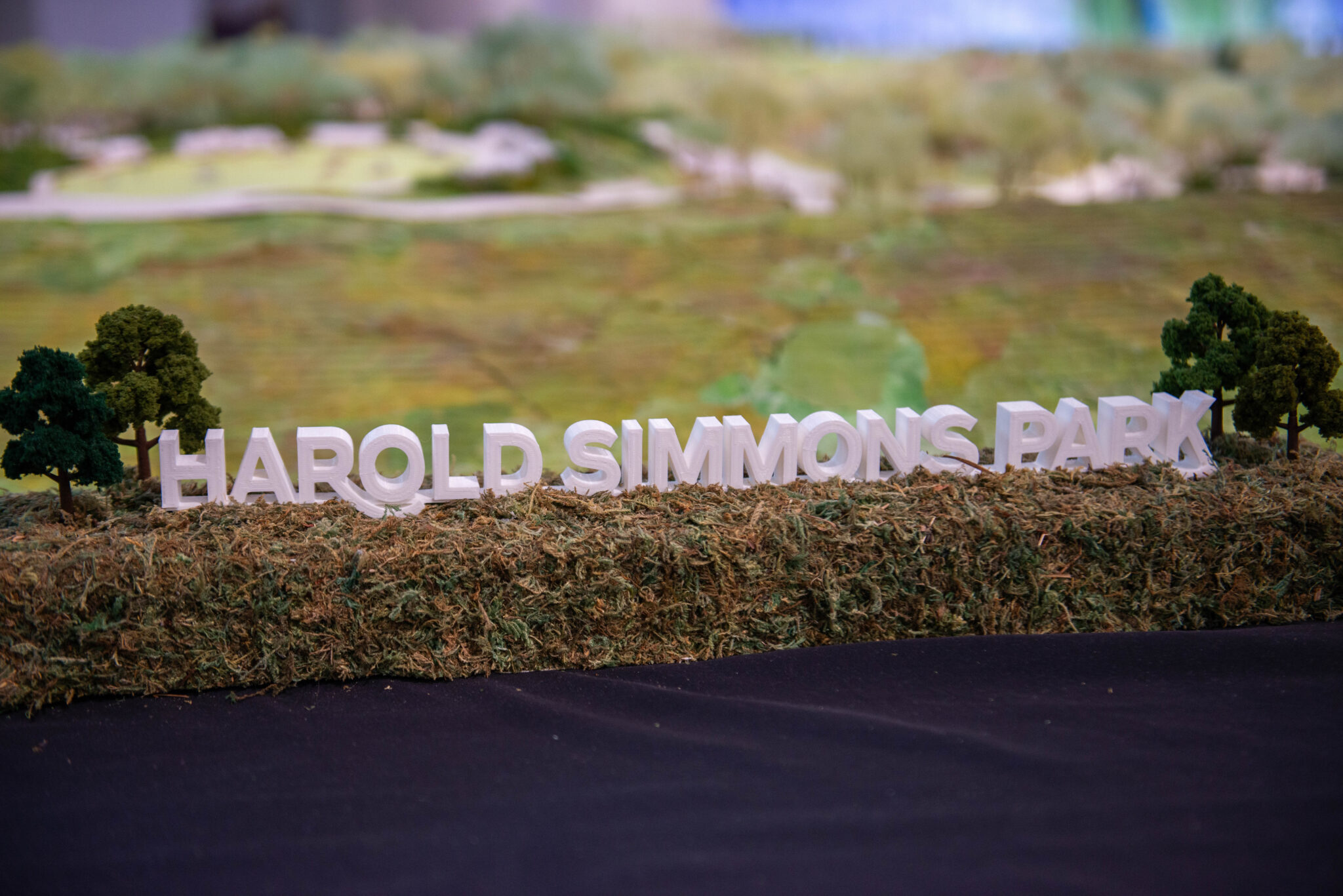
These concerns don’t just come with Halperin Park, but with the development of the $325-million Harold Simmons Park, which broke ground in April 2025.
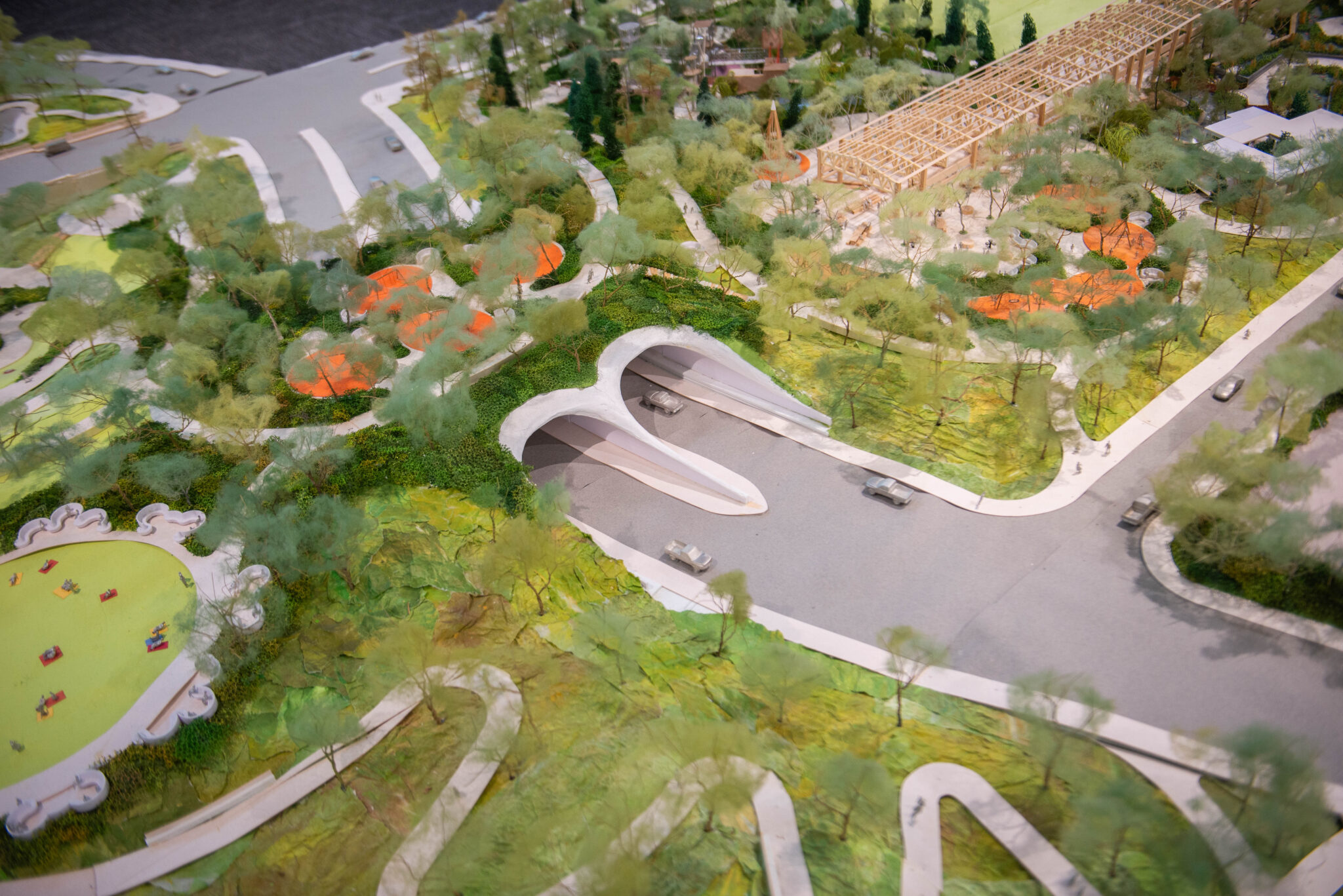
Harold Simmons Park will span a total of 250 acres primarily between the Ronald Kirk Bridge down to the Margaret McDermott Bridge. The park was previously planned to be 200-acres between the levees. There was the brief stint of the Dallas Wave, which provided whitewater for kayakers for a cost of $4 million, just to remove for $2 million more. The City has been trying to make the Trinity River more useful for some time. Now, that use has moved up to include additional gateways and overlooks.
Harold Simmons Park has worked with organizations like the University of North Texas at Dallas College of Law to provide assistance in protesting property taxes and has hosted community conversations on gentrification to take those concerns into the park.
“That’s just how development works … if you have an attractive area, well then make the neighborhood around there a place that people will come in and develop,” Homan says. “Now, of course, that’s going to bring all of those problems that we had with Bishop Arts, and that’s gentrification, and that’s just the nature of the beast. That is why I feel that Tony Moore and his people have really gone out of their way to make sure that they are providing for the people there, to stay there and protecting them with jobs and giving them a stake into the benefits of the park being there actively.”
Moore was the president and CEO of Trinity Park Conservancy, the nonprofit behind Harold Simmons Park. He recently announced the transition of his role to Chief Operating Officer Brian Kilpatrick, effective immediately on Tuesday, May 26.
“Dallas has been waiting for this park for so long, so we had to move in urgency to get something built and get something delivered to the citizens of Dallas,” Moore told the Advocate in February. “And so, to be honest, we’re 30 years late in doing something. We did not have the luxury of waiting anymore.”
One of those planned overlooks, the 22-acre West Overlook, is the first expected to be completed. Playground materials are being constructed in Germany, with the first shipment of features expected to arrive this summer.
Sam Acosta, Oak Cliff native and director of community government affairs for TPC, connects with local leaders to keep organizations informed about the park’s progress and receive feedback, calling the process “a two-way street.”
“I can say we’ve been lucky because prior to joining TPC, TPC was already doing community work,” he says.
West Dallas 1, a coalition of neighbors and neighborhood associations who reside in 75212, is one of the community organizations Acosta has worked with. The organization focuses on protecting the community’s identity and quality of life through collaboration with officials and allies.
Starlet Ramirez, a Ledbetter neighbor and West Dallas 1 member, is a parent of a child with a disability. She says that Moore really impressed her when after her suggestion, he looked into Morgan’s Wonderland in San Antonio to see an example of accessibility in parks.
“Every ride is accessible to the child, whether they are in a wheelchair, where they can walk, any kind of mobility issues, and for him to go and see that and bring that vision back here,” she says. “He’s not going to be able to replicate the whole thing, but to know that this is what I’m talking about when I say inclusive … that means my voice was heard, and we have a seat at the table, and different people can enjoy this.”
Jeff Howard, who currently serves as the president of West Dallas 1, says that with Harold Simmons Park, it does feel like the community is included.
“I think any chance you can bring recreation and quality of life to the neighborhood and include the neighborhood, the surrounding community, it’s a win-win … because we are replacing what’s there with more recreational green space,” Howard says.
Community engagement was also included in the earlier design process since there were previous community meetings and outreach events focused on that.
“Their fingerprint is all over this park,” says Marcus Shropshire, vice president of design and construction for TPC.
Homan says that with the development of Harold Simmons and Halperin Park, it’s like people “finally discovered the pretty part of the world here.”
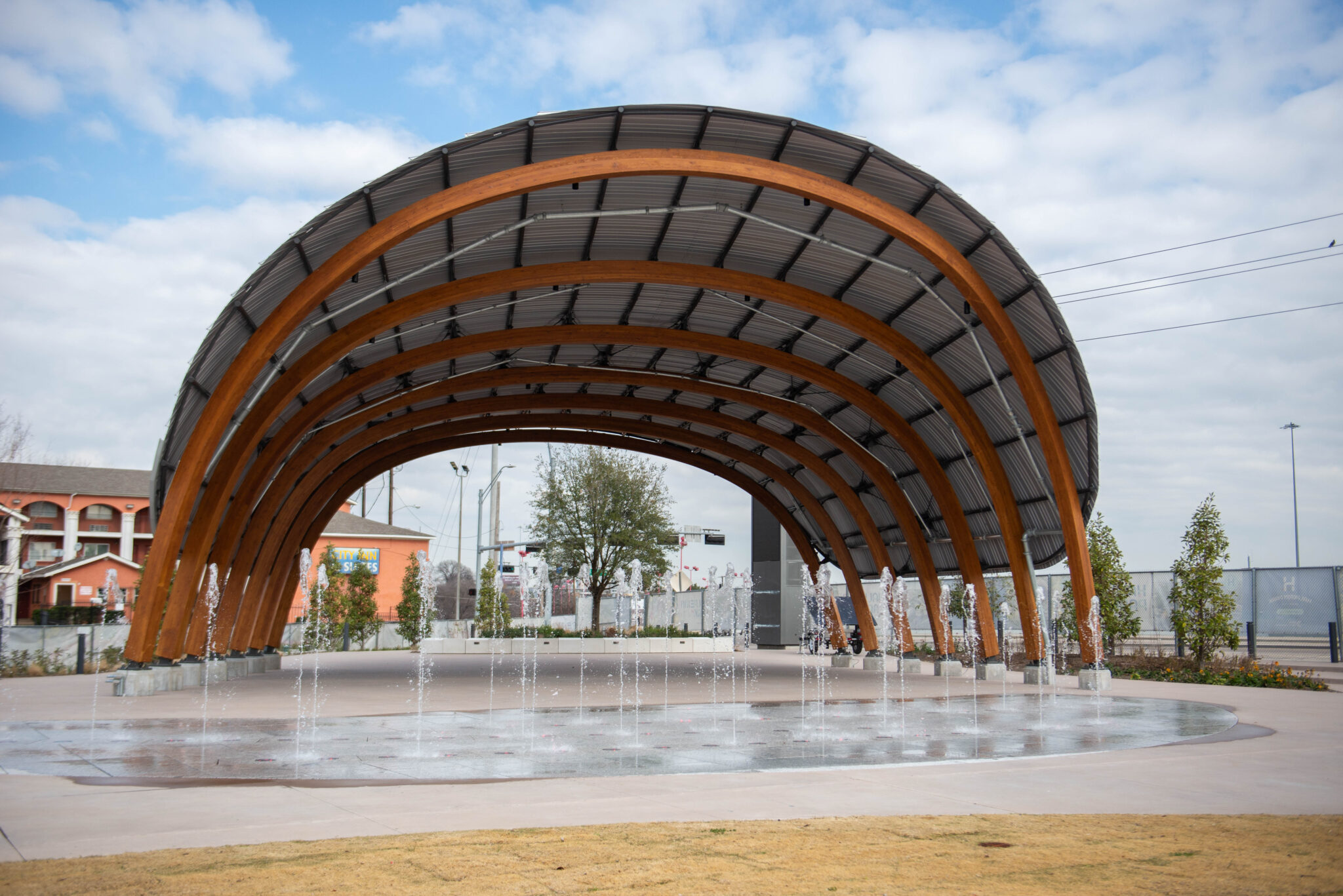
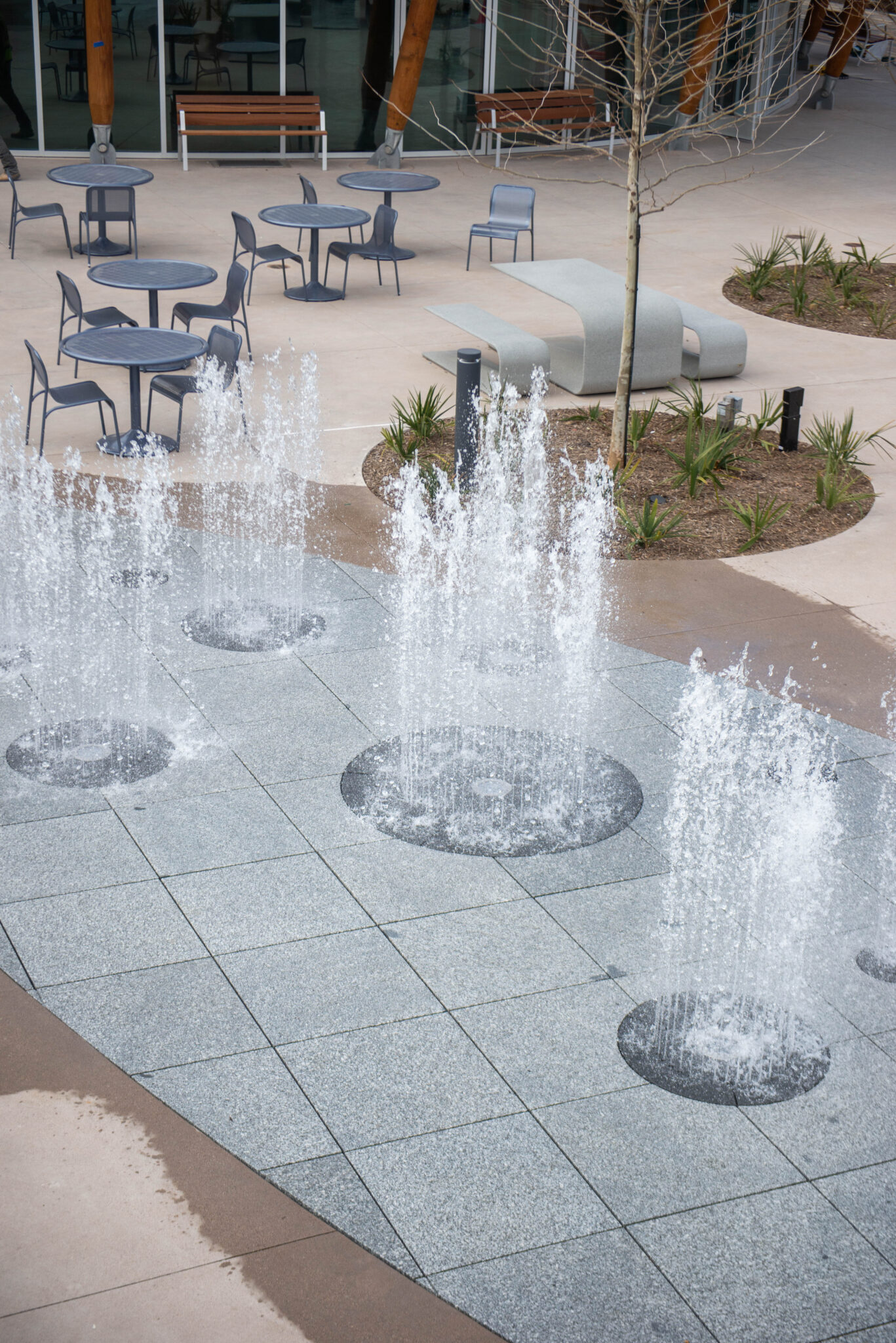
Halperin Park includes a bandshell, skywalk to a skyline view, water features, playground and central lawn and will later include a phase two extending to Marsalis Avenue. The 250 acres of Harold Simmons Park will feature splashpads, sport courts, gardens, picnic and grilling areas, event lawns and spaces, a skate park, roller rink and nearly 2,000 mature trees.
“(Harold) Simmons Park is going to be like Six Flags on steroids,” she says. “They’re just going to have so much there. And the Halperin Park is going to be a place that is more of a community park and will be something that those of us that live down here will be able to just sort of share and just be able to say, ‘Our family’s been reunited. We’re one again. We’ve become whole again.’”
Homan got involved with Harold Simmons Park through her role in the Fort Worth Avenue Development Group. The group connected with park leadership after learning that The West Dallas Gateway Pecan Tree, which was declared historic in 2023, would be in the West Overlook portion of the park.
“It’s one of the first trees in Dallas to have that sort of designation. And so now we’re working with the park,” says Ron Veech, FWADG president. “We have a very large plaque talking about the tree and everything, and it’s in the Trinity (Park) Conservancy offices. … Tony has assured us that we’re going to be included in the plans for that section of the park. And we definitely want to do whatever we can to make sure that tree is safe and well protected.”
The pecan tree has survived quite a few accidents, such as damage and breakage to the guardrail surrounding it. When it comes to traffic, parking and safety at the park, Veech says he understands those as valid concerns from the community, but believes Harold Simmons Park will work to address that.
“I’m hopeful that, just like everything else in Dallas, though with growth there’s going to be traffic,” he says. “And I think it’ll be worth it for them to have to maybe find a parking place if they do drive, but once you get into the park, I think it’s going to be such a nice experience that you’ll forget about those traffic woes.”
Amanda Reiter, Kings Highway neighbor, says she often drives by Harold Simmons Park, but doesn’t know much about what the plans are.
“I think people are probably a little concerned about the construction and being able to get out of Oak Cliff and navigating around the park,” she says. “You know, obviously, again, the more green space the better. I look forward to what they can bring. I just am keeping an open mind around navigating the park and all the construction.”
For Paula Hutchison, a West Dallas 1 member and Gilbert-Emory neighbor, construction is not unique to Harold Simmons Park but is just a part of living in Dallas.
“I mean, on my way to church, they got four holes cut about 500 yards apart. It’s everywhere,” Hutchison says. “So you just get used to it really.”
Construction is not the only hurdle when it comes to Dallas but also keeping the trust of the community with the execution of each new, extravagant project. Ronnie Mestas, a co-founder of West Dallas 1, says that with Harold Simmons Park leadership, he has trust and confidence that the community will at least be included in that conversation. As for Jasso, he’s a little more unsure that all plans will be completed for both parks.
“I know we have phase one on Halperin, and there is a phase two. So we would love to see phase two happen. It’s just that now we have two parks, for lack of a better term, fighting for the same private funding. So I know Harold Simmons also is a huge, huge park that’s also going to be done in phases,” Jasso says. “And so while we see these beautiful images, I’m just hopeful that we can get the whole park … Hopeful that it’ll be completed to the 100% of the design.”
Correction/Clarification: The cost for Harold Simmons Park has been updated from $350 million to $325 million to more accurately reflect the latest estimated costs.
