

Chad West has served as a council member since May 2019, having been reelected in 2021, 2023 and 2025. Prior to his election to council, West served on the Dallas City Plan and Zoning Commission from 2017 to 2018.
With this being your fourth and final term as the District 1 Council member, how have your past experiences on council and as a former city plan and zoning commissioner guided you this year?
Serving both on the City Council and previously on the Plan Commission has given me a long view of how decisions shape neighborhoods over time. I’ve learned that good policy isn’t just about reacting, it’s about making the right long-term decisions for the Dallas of tomorrow. This year, I’ve leaned heavily on that experience to focus on implementation: making sure the plans we’ve adopted actually translate into real improvements on the ground, whether that’s safer streets, better zoning or more attainable housing options.
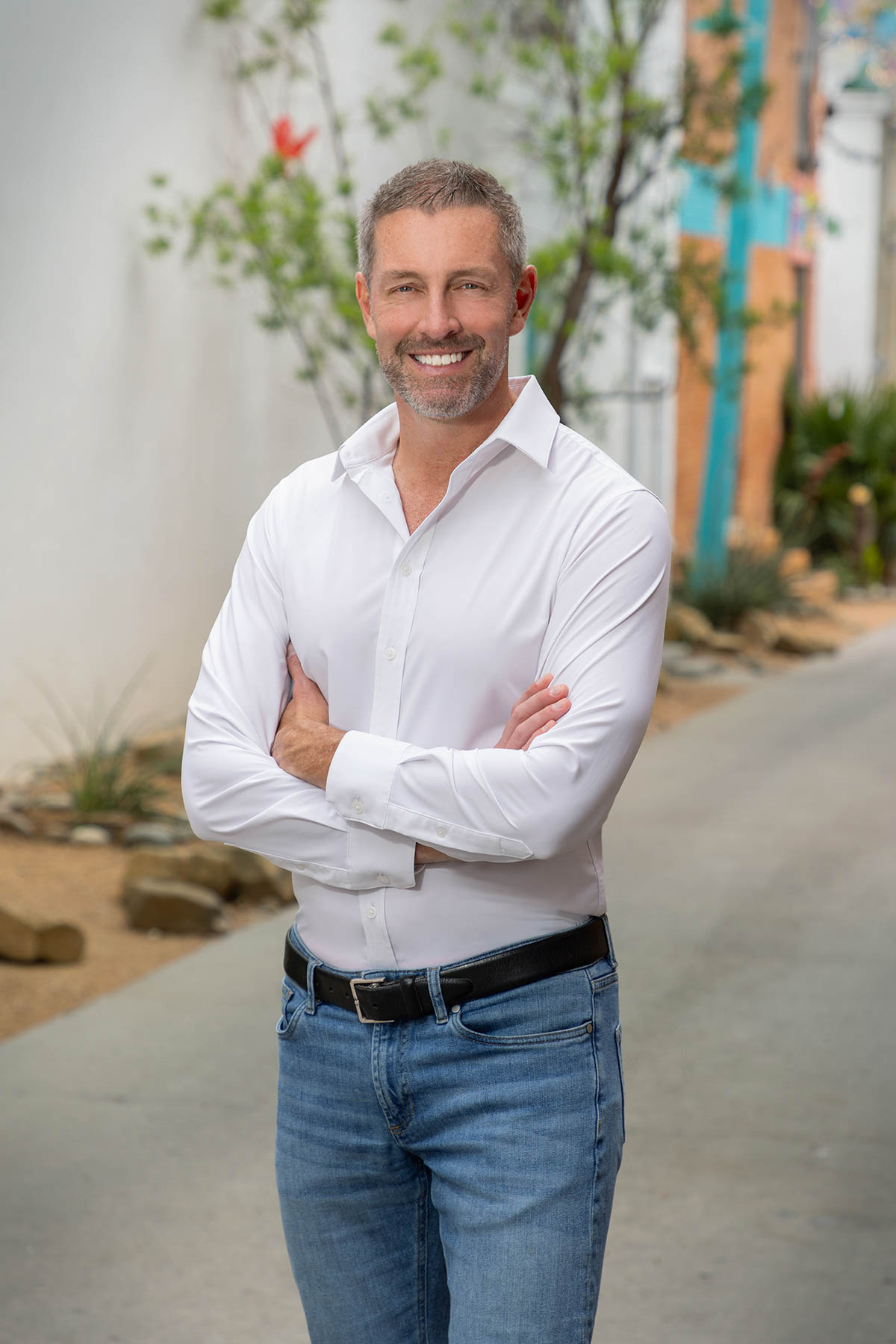
Photo courtesy of Ashley Long
Housing and development have been key priorities throughout your time on City Council. How would you describe the state of housing in District 1, and what steps do you think should be taken to address housing throughout the city?
District 1 reflects what we’re seeing citywide -— strong demand, rising costs and not enough supply at all price points. We’ve made progress in diversifying housing types, but affordability remains a challenge. I’m proud that after a nearly two-year-long effort, we voted to protect the Dallas Public Facility Corporation (DPFC) and Dallas Housing Finance Corporation (DHFC), which together account for over ¾ of the new affordable housing built in Dallas last year. I’m also proud that District 1 produced 572 new units of deed-restricted affordable housing in 2024, a whopping 42% of the city’s total. Moving forward, zoning reform will be a great opportunity to modernize our code, encourage missing-middle housing, and make it easier to build in the right places.
At the same time, I’ll continue supporting the Home Repair program, increasing property tax relief for seniors, and working with partners like Child Poverty Action Lab (CPAL) to increase homestead exemption claims across District 1 so growth doesn’t come at the expense of displacement.
How do you balance preservation with the need for and interest in new development in our neighborhood?
It starts with recognizing that preservation and growth aren’t mutually exclusive. We have neighborhoods in Oak Cliff with deep historic character, and that should be respected. We already have nearly half of the city’s conservation and historic districts, and the next four underway citywide are all in District 1. But we also need to accommodate new residents and investment. The balance comes from thoughtful long-term planning like the West Oak Cliff Area Plan – directing diverse housing options to appropriate corridors, maintaining neighborhood integrity and ensuring new development complements the existing fabric rather than overwhelms it.
As chair of the Finance Committee, and amid the ongoing discussions about City Hall, what has been your biggest takeaway from the process?
To my earlier point, we must do a better job thinking long-term as a city and city council. Just like a family’s personal finances, it’s easier to spend on something fun today like a vacation than do the financially prudent thing of saving and planning for the long term. Unfortunately, decades of councils have kicked the can of City Hall maintenance down the road. While I believe this shows that residents care most about City services they use most often – like streets, parks and libraries – it also is a reminder we need to think more creatively about our city’s financial health long-term. I also think this process has shown how important trust and transparency is, and we must do a better job both as a council and at the City leadership level to make sure our residents feel informed and included in these important decisions.
Since the adoption of Forward Dallas 2.0 in September 2024, how has your district progressed toward those goals? Which areas still need more alignment?
ForwardDallas 2.0 is contemplated every time a zoning case is brought forward. I don’t believe I’ve approved a single zoning matter in District 1 that was not in alignment with ForwardDallas 2.0. I’m glad we proactively worked to create the long-term planning in the West Oak Cliff Area Plan. I also plan to initiate conversations for the Far West Oak Cliff area near Joey Georgusis Park because many of those neighbors have long been neglected.
What is your top priority as you look ahead to the next city budget?
It’s going to be a tough budget. My priorities will continue to be public safety, safer streets, and prioritizing the essential City services people rely on like our libraries and parks. I think the challenge is an opportunity to start thinking more creatively, like we’re doing at the North Oak Cliff Library by delivering a new library that will be financially supported by housing development on top.
What can Oak Cliff neighbors expect from the city as it prepares for the impacts of this summer’s FIFA World Cup?
I am so excited to put Dallas on the world stage for FIFA World Cup, but it’s important that this event benefits our communities. I’ve been working with City staff and local stakeholders to make sure Oak Cliff is ready to capitalize on this opportunity – especially for our small businesses. I know many neighbors are excited for this opportunity to come together and celebrate Oak Cliff. We also need to work to minimize possible disruptions for neighbors like increased traffic and noise. I’m confident we can find the right balance.
What has been your biggest accomplishment during this term thus far? What has been your biggest challenge?
I’d say it’s two things. First is making our streets safer for all road users and prioritizing the safety of vulnerable road users like pedestrians and cyclists over the speed of cars. We saw that in the Sylvan-Colorado “peanut” roundabout under design and the complete streets coming to Davis and downtown Elmwood. The second is modernizing our approach to housing to ensure we preserve the beautiful historic neighborhoods of Oak Cliff while delivering much needed new housing.
The biggest challenge is navigating the growth in a way that is inclusive so that the neighbors who have been here for generations benefit from it rather than face displacement. It’s a major challenge citywide, but Oak Cliff is among the hardest hit, partly due to its high demand as a place to live.
How can neighbors become more involved in council decisions?
The best way is to stay engaged early and consistently. Sign up for my newsletter, attend community meetings, reach out to my office, follow council agendas, and participate in neighborhood associations. Too often, people get involved late in the process when decisions are already taking shape. The more input we have upfront, the better outcomes we can achieve together. Oak Cliff is lucky to have many passionate advocates for safe streets, housing, parks, libraries, our seniors and much more.
This interview has been edited for clarity and brevity.
